

Meta Title: Why Drinking Less Water Causes Daily Discomfort | Daily Health Portal
Meta Description: Drinking less water can lead to fatigue, headaches, digestion problems, and daily discomfort. Learn how dehydration affects your body and simple ways to stay hydrated.
Introduction: Water – The Most Ignored Health Essential
Water is the foundation of life, yet it is one of the most neglected aspects of daily health. Many people focus on diet plans, workouts, supplements, and weight loss goals, but forget the simplest health habit—drinking enough water.
Drinking less water may not seem like a serious issue at first. However, over time, even mild dehydration can cause daily discomfort, affecting your energy, digestion, focus, skin, and overall well-being. These discomforts often go unnoticed or are blamed on stress, poor sleep, or aging.
In this article, we will explore why drinking less water causes daily discomfort, how dehydration silently impacts the body, and what you can do to stay properly hydrated for better health and fitness.
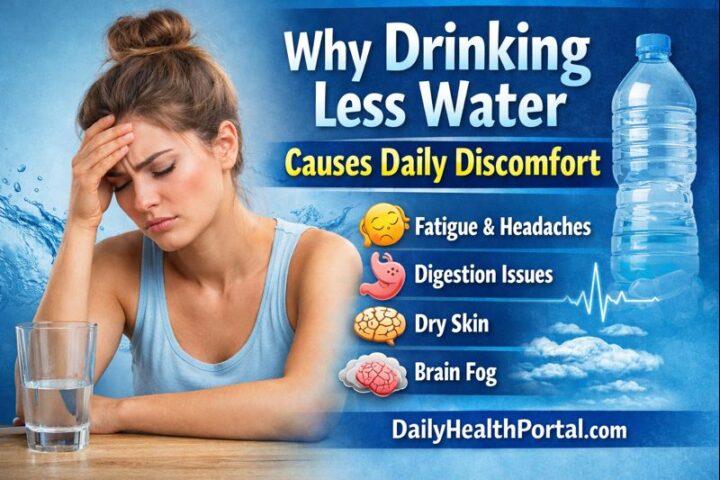
Understanding Dehydration: What Happens When You Drink Less Water?
What Is Dehydration?
Dehydration occurs when your body loses more fluids than it takes in. Since the human body is made up of nearly 60% water, even a small drop in hydration levels can disrupt normal bodily functions.
Dehydration doesn’t only happen in extreme heat or after intense workouts. Chronic low water intake, which many people experience daily, can lead to continuous discomfort.
Mild Dehydration Is More Common Than You Think
Many people walk around mildly dehydrated without realizing it. Symptoms may include:
- Feeling tired without a clear reason
- Dry mouth or lips
- Headaches
- Difficulty concentrating
- Digestive discomfort
These signs are often ignored, but they are your body’s way of asking for water.
Why Drinking Less Water Affects Your Daily Comfort
1. Low Energy Levels and Constant Fatigue
One of the earliest signs of dehydration is persistent tiredness. Water plays a key role in transporting oxygen and nutrients to cells. When you drink less water:
- Blood volume decreases
- Oxygen delivery slows down
- Muscles and brain work harder
This leads to low energy levels, even if you slept well. Many people rely on caffeine to fight fatigue, but dehydration is often the real cause.
2. Frequent Headaches and Brain Fog
Your brain is highly sensitive to hydration levels. Even slight dehydration can cause:
- Headaches
- Mental fatigue
- Poor focus
- Slower reaction time
When water levels drop, the brain temporarily shrinks away from the skull, triggering pain receptors. This is why drinking less water often results in daily headaches or brain fog, especially during long work hours.
3. Digestive Problems and Constipation
Water is essential for proper digestion. Drinking less water can slow down your digestive system, leading to:
- Constipation
- Bloating
- Acid reflux
- Stomach discomfort
Without enough water, your body pulls water from stools, making them hard and difficult to pass. This causes daily digestive discomfort, especially in people who already have gut sensitivity.
4. Muscle Cramps and Body Aches
Muscles need water to function smoothly. When hydration levels drop:
- Electrolyte balance is disturbed
- Muscles become tight
- Cramps and stiffness increase
This is common in people who exercise, work physically demanding jobs, or sweat a lot. Drinking less water makes muscles more prone to pain, cramps, and slow recovery.
5. Dry Skin and Premature Aging
Skin health is directly linked to hydration. Drinking less water can cause:
- Dry, flaky skin
- Reduced elasticity
- Dull complexion
- Fine lines appearing earlier
While skincare products help externally, hydration works from the inside. Proper water intake improves skin texture and gives a natural glow.
How Dehydration Affects Mental and Emotional Health
Mood Swings and Irritability
Studies show that dehydration affects mood and emotional stability. People who drink less water often experience:
- Irritability
- Anxiety
- Low motivation
- Feeling overwhelmed
The brain needs adequate hydration to regulate neurotransmitters. Even mild dehydration can disrupt emotional balance and increase stress levels.
Reduced Focus and Productivity
Whether you work in an office or from home, dehydration can silently reduce productivity. Drinking less water leads to:
- Poor concentration
- Memory issues
- Slower thinking
This daily discomfort often goes unnoticed but significantly impacts work performance and decision-making.
Drinking Less Water and Its Impact on Fitness
Poor Workout Performance
Hydration is crucial for physical activity. When you drink less water:
- Endurance decreases
- Strength drops
- Heart rate increases
- Recovery slows down
Even a 2% drop in hydration can significantly affect workout performance. This makes fitness routines feel harder than they should be.
Increased Risk of Injury
Dehydration reduces joint lubrication and muscle flexibility. This increases the risk of:
- Muscle strains
- Joint pain
- Sports injuries
Proper hydration keeps joints cushioned and muscles flexible, reducing daily physical discomfort.
Common Reasons Why People Drink Less Water
Understanding why people fail to drink enough water helps in correcting the habit.
1. Busy Lifestyle
Many people forget to drink water due to work pressure, meetings, or screen time.
2. Lack of Thirst Signals
Thirst is not always a reliable indicator. By the time you feel thirsty, your body is already dehydrated.
3. Replacing Water With Other Drinks
Coffee, tea, soda, and energy drinks do not replace water. Some even increase dehydration.
4. Cold Weather Habits
People tend to drink less water in winter, even though the body still needs hydration.
How Much Water Does Your Body Really Need?
There is no one-size-fits-all rule, but general guidelines suggest:
- Men: Around 3.7 liters per day
- Women: Around 2.7 liters per day
Your water needs depend on:
- Body weight
- Activity level
- Climate
- Diet
Listening to your body and maintaining light-colored urine is a good hydration indicator.
Simple Signs You Are Not Drinking Enough Water
Look out for these daily signs:
- Dark yellow urine
- Dry mouth or lips
- Headaches
- Fatigue
- Dizziness
- Constipation
If you experience these regularly, your body is likely dehydrated.
Practical Tips to Drink More Water Daily
1. Start Your Day With Water
Drink 1–2 glasses of water right after waking up. This kickstarts hydration and digestion.
2. Carry a Water Bottle
Keeping water nearby increases the chances of sipping regularly.
3. Set Hydration Reminders
Use phone alarms or apps to remind you to drink water during the day.
4. Eat Water-Rich Foods
Include fruits and vegetables like:
- Watermelon
- Cucumbers
- Oranges
- Lettuce
These contribute to daily hydration.
5. Flavor Your Water Naturally
Add lemon, mint, or berries to make water more enjoyable.
Hydration Myths That Cause Daily Discomfort
“I Only Need Water When I’m Thirsty”
False. Thirst appears after dehydration has already started.
“Tea and Coffee Are Enough”
Caffeinated drinks do not replace water and may increase fluid loss.
“Clear Urine Means Too Much Water”
Clear or light yellow urine usually indicates proper hydration.
Internal Linking Suggestions (For DailyHealthPortal.com)
- Link to: “Benefits of Drinking Water for Overall Health”
- Link to: “Signs of Dehydration You Should Never Ignore”
- Link to: “Best Hydration Tips for Busy People”
These internal links help improve SEO, user engagement, and page authority.
Final Thoughts: Small Habit, Big Impact
Drinking less water may seem harmless, but it can silently affect your daily comfort, energy, digestion, mood, and fitness. The good news is that hydration is one of the simplest health habits to fix.
By drinking enough water daily, you can experience:
- Better energy levels
- Improved focus
- Healthier digestion
- Clearer skin
- Enhanced physical performance
Sometimes, the solution to daily discomfort isn’t medicine or supplements—it’s a glass of water.
Frequently Asked Questions (FAQs)
1. Can drinking less water really cause daily fatigue?
Yes. Dehydration reduces oxygen and nutrient delivery to cells, leading to low energy levels and constant tiredness even after proper sleep.
2. How does dehydration affect digestion?
Drinking less water slows digestion and hardens stools, causing constipation, bloating, and stomach discomfort on a daily basis.
3. Is mild dehydration dangerous?
Mild dehydration may not be life-threatening but can cause headaches, fatigue, poor focus, and long-term health discomfort if ignored.
4. Does drinking more water improve skin health?
Yes. Proper hydration improves skin elasticity, reduces dryness, and supports a healthy, natural glow from within.
5. Can dehydration cause headaches every day?
Yes. Even slight dehydration can trigger frequent headaches due to reduced blood flow and brain tissue shrinkage.
6. How can I tell if I’m drinking enough water?
Light yellow urine, steady energy levels, and minimal thirst are good indicators of proper hydration.
7. Does water intake affect workout performance?
Absolutely. Drinking less water reduces strength, endurance, and recovery, making workouts feel harder and less effective.
8. Are fruits enough to meet daily hydration needs?
Fruits help, but they cannot fully replace drinking water. Direct water intake is still essential.