

Meta Title
Why Mental Tiredness Feels Worse Than Physical Work | Health & Fitness Guide
Meta Description
Mental tiredness can feel more exhausting than physical work. Learn the science behind mental fatigue, its symptoms, causes, and proven ways to recover faster for better health and fitness.
Introduction: The Hidden Exhaustion You Can’t See
Have you ever noticed how a full day of mental work—thinking, planning, decision-making, or worrying—can leave you feeling more drained than hours of physical labor? You may sit all day, yet feel completely exhausted by evening.
This is not imagination. Mental tiredness often feels worse than physical work, and science strongly supports this experience.
In today’s fast-paced world, mental fatigue has become extremely common, especially among people working with computers, phones, constant notifications, and emotional stress. Understanding why mental tiredness hits harder is essential for protecting your overall health, fitness, and productivity.
This article explains:
- What mental tiredness really is
- Why it feels heavier than physical exhaustion
- How it affects the brain and body
- Signs you should not ignore
- Practical ways to recover and regain energy
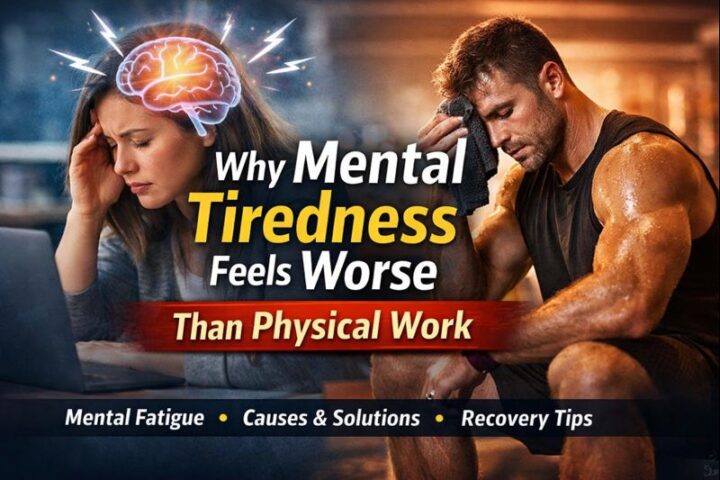
Understanding Mental Tiredness vs Physical Fatigue
What Is Mental Tiredness?
Mental tiredness, also called mental fatigue, occurs when the brain is overworked for long periods without adequate rest. It happens due to:
- Continuous thinking or problem-solving
- Emotional stress or anxiety
- Multitasking and information overload
- Long screen time
- Poor sleep and mental pressure
Unlike physical fatigue, mental tiredness does not improve quickly with rest.
What Is Physical Fatigue?
Physical fatigue happens when muscles are overused. It is common after:
- Exercise or gym workouts
- Manual labor
- Walking, lifting, or sports
The key difference is that physical tiredness has a clear recovery pathway—rest, food, hydration, and sleep usually fix it.
Why Mental Tiredness Feels Worse Than Physical Work
1. The Brain Never Fully “Switches Off”
When your body works physically, muscles rest once activity stops. But the brain keeps working even when you sit or lie down.
- Worrying
- Overthinking
- Planning tomorrow
- Replaying conversations
This constant mental activity prevents real recovery, making mental exhaustion feel deeper and longer-lasting.
2. Mental Fatigue Disrupts Brain Chemicals
Mental tiredness affects key neurotransmitters like:
- Dopamine (motivation and reward)
- Serotonin (mood regulation)
- Cortisol (stress hormone)
When these chemicals go out of balance:
- Motivation drops
- Mood worsens
- Energy feels completely drained
Physical work, on the other hand, releases endorphins, which actually improve mood and energy.
3. Mental Tiredness Impacts the Whole Body
Mental fatigue is not “just in the head.” It affects:
- Heart rate
- Digestion
- Sleep quality
- Immune function
This is why mental tiredness often comes with:
- Headaches
- Body aches
- Heavy eyes
- Weakness
Physical tiredness is localized; mental fatigue is systemic.
4. Decision Fatigue Drains Energy Faster
Every decision consumes mental energy:
- What to eat
- What to reply
- What task to do next
This is called decision fatigue. Modern life forces hundreds of small decisions daily, exhausting the brain.
Physical work usually follows a repetitive pattern, requiring less decision-making.
5. Stress Makes Mental Work Feel Heavier
Mental tasks are often tied to:
- Deadlines
- Responsibility
- Fear of failure
- Financial pressure
Stress keeps the nervous system in fight-or-flight mode, which is extremely energy-consuming. Physical work, especially routine labor, rarely triggers this level of stress.
Signs You Are Mentally Exhausted (Not Just Tired)
Recognizing mental tiredness early is important for long-term health.
Common Symptoms of Mental Fatigue
- Constant lack of motivation
- Brain fog and poor concentration
- Irritability or mood swings
- Trouble sleeping despite tiredness
- Feeling overwhelmed by simple tasks
- Reduced productivity
Ignoring these signs can lead to burnout, anxiety, or depression.
Mental Tiredness and Fitness: A Dangerous Combination
Mental fatigue directly affects physical fitness and health goals.
How Mental Tiredness Impacts Fitness
- Skipping workouts due to low motivation
- Poor diet choices (sugar and junk food cravings)
- Reduced muscle recovery
- Hormonal imbalance
Even athletes experience poor performance when mentally exhausted.
Why Physical Work Often Feels “Easier” in Comparison
Physical work provides:
- Clear start and end
- Visible effort and results
- Natural movement and circulation
- Stress relief
This is why many people say:
“I feel better after physical work, but worse after mental work.”
The body is designed to move, but the brain is not designed for nonstop stimulation.
Long-Term Effects of Unmanaged Mental Fatigue
If mental tiredness continues unchecked, it can cause:
- Chronic stress
- Burnout syndrome
- Sleep disorders
- Weight gain
- Weakened immunity
This makes mental fatigue a serious health issue, not a minor inconvenience.
How to Recover From Mental Tiredness Effectively
1. Prioritize Quality Sleep
Sleep is the brain’s main repair system.
- Maintain consistent sleep timings
- Avoid screens 1 hour before bed
- Aim for 7–9 hours nightly
2. Take Mental Breaks (Not Just Physical Ones)
Short breaks improve focus and energy:
- 5–10 minutes every hour
- Step away from screens
- Practice deep breathing
3. Reduce Multitasking
Multitasking overloads the brain.
- Focus on one task at a time
- Complete tasks in blocks
- Use simple to-do lists
4. Add Light Physical Activity
Even gentle movement helps mental recovery:
- Walking
- Stretching
- Yoga
Physical movement improves blood flow to the brain and reduces stress hormones.
5. Manage Information Intake
Constant news, social media, and notifications cause mental clutter.
- Limit screen time
- Turn off unnecessary alerts
- Take digital detox breaks
6. Practice Mindfulness or Meditation
Mindfulness helps the brain reset.
- 5–10 minutes daily
- Focus on breathing
- Observe thoughts without judgment
Nutrition Tips to Fight Mental Fatigue
What you eat directly affects brain energy.
Brain-Boosting Foods
- Fatty fish (omega-3s)
- Nuts and seeds
- Whole grains
- Leafy greens
- Adequate hydration
Avoid excessive caffeine and sugar, which cause energy crashes.
Mental Health Is Fitness Too
True health and fitness are not only about muscles or weight. Mental strength and recovery are equally important.
Treating mental tiredness seriously improves:
- Productivity
- Physical performance
- Emotional balance
- Overall quality of life
Internal Linking Suggestions (For Website Use)
- Mental Health and Stress Management
- Benefits of Walking for Mental Health
- Importance of Sleep for Overall Fitness
- How Exercise Improves Brain Health
Frequently Asked Questions (FAQs)
1. Why does mental work feel more exhausting than physical work?
Mental work overloads the brain continuously without clear rest, disrupting brain chemicals and increasing stress hormones. Physical work allows natural recovery and releases endorphins, making it feel less draining overall.
2. Can mental tiredness cause physical symptoms?
Yes, mental fatigue can cause headaches, body pain, weakness, sleep issues, and digestive problems. The brain controls the entire body, so mental exhaustion often leads to physical discomfort.
3. How long does mental fatigue take to recover?
Recovery time depends on severity. Mild mental tiredness may improve with rest and sleep, while chronic mental fatigue can take weeks and requires lifestyle changes and stress management.
4. Is mental tiredness a sign of burnout?
Persistent mental tiredness is one of the earliest signs of burnout. If ignored, it can lead to emotional exhaustion, reduced performance, and long-term mental health issues.
5. Does exercise help reduce mental fatigue?
Yes, regular physical activity improves blood flow to the brain, balances stress hormones, and boosts mood-enhancing chemicals, making it highly effective against mental fatigue.
6. Can poor diet worsen mental tiredness?
Absolutely. Nutrient deficiencies, dehydration, and excessive sugar intake negatively affect brain function and energy levels, increasing mental fatigue.
7. How can I prevent mental tiredness at work?
Take regular breaks, avoid multitasking, manage screen time, stay hydrated, and maintain healthy sleep habits to protect your mental energy during work hours.
8. Is mental tiredness common in today’s lifestyle?
Yes, modern digital lifestyles, constant connectivity, and high mental demands have made mental tiredness extremely common across all age groups.