

Introduction: Why HIIT Is Perfect for Beginners
High-Intensity Interval Training (HIIT) has become one of the most effective workout styles for people wanting fast results without spending hours exercising. It combines short bursts of intense activity with brief recovery periods, giving you maximum benefits in minimum time.
For beginners, a 15-minute HIIT routine is the perfect starting point. It’s fast, simple, easy to follow, and requires no equipment. Whether you’re trying to lose weight, improve cardiovascular health, or increase your energy levels, HIIT works for almost everyone.
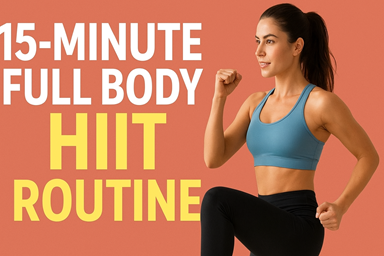
This guide includes a complete 15-minute full-body HIIT routine, step-by-step instructions, benefits, tips for form, and beginner safety advice.
H2: What Makes HIIT So Effective?
Before jumping into the workout, it’s helpful to understand why HIIT is so powerful.
1. Burns More Calories in Less Time
HIIT elevates your heart rate quickly and keeps it high, helping you burn more calories in just 15 minutes than a typical 45-minute steady workout.
2. Boosts Metabolism for Hours
The “afterburn effect” (EPOC) means your body continues burning calories long after the workout ends.
3. Improves Heart & Lung Health
Short bursts of intensity train your cardiovascular system more efficiently.
4. Builds Strength & Endurance
HIIT targets major muscles while also improving stamina.
5. No Equipment Needed
Your own bodyweight is enough for a full workout.
6. Great for Busy Lifestyles
Fitting in 15 minutes during lunch breaks, mornings, or evenings is easy.
H2: Before You Start: Safety Tips for Beginners
HIIT can be intense, so here are a few important points:
- Start slow and increase intensity gradually.
- Stay hydrated before and after your workout.
- Warm up for at least 2 minutes to prevent injury.
- Focus on proper form, not speed.
- If you experience dizziness, sharp pain, or breathing troubles—stop immediately.
- Always cool down after exercising.
H2: 15-Minute Full Body HIIT Routine for Beginners
This routine includes 10 exercises, each lasting 40 seconds, followed by 20 seconds rest.
Complete all exercises to finish your 15-minute session.
Equipment: None
Target Areas: Full body
Intensity: Beginner-friendly
Total Time: 15 minutes
H2: Warm-Up (2 Minutes)
Before starting the main HIIT routine, perform this gentle warm-up:
1. March in Place – 30 seconds
Lift your knees softly and swing your arms.
2. Arm Circles – 30 seconds
Rotate your arms forward and backward to loosen your shoulders.
3. Side Steps – 30 seconds
Step side to side while raising your arms.
4. Light Jog in Place – 30 seconds
Keep it simple and rhythmic to increase blood flow.
H2: Main Workout (12 Minutes)
Each exercise: 40 seconds on, 20 seconds rest.
H3: 1. Jumping Jacks
Jumping jacks are excellent for warming up your cardiovascular system.
Benefits:
- Raises heart rate
- Activates legs and arms
- Improves coordination
Beginner Tip: Step side-to-side instead of jumping if impact feels high.
H3: 2. Bodyweight Squats
Squats target your lower body and help build core stability.
How to Do:
- Keep your feet shoulder-width apart.
- Push your hips back as if sitting in a chair.
- Keep your chest lifted.
Benefits:
- Strengthens legs and glutes
- Improves posture
- Builds lower body endurance
H3: 3. Modified Push-Ups (Knee Push-Ups)
Beginner push-ups help strengthen your chest, arms, and core.
How to Do:
- Keep knees on the ground.
- Lower your chest slowly.
- Keep your elbows tucked slightly in.
Benefits:
- Builds upper body strength
- Improves core stability
H3: 4. High Knees (Marching or Jogging)
A great cardio exercise that lifts the heart rate quickly.
Benefits:
- Burns calories rapidly
- Strengthens hip flexors
- Enhances coordination
Beginner Tip: Lift knees slowly if you’re new to cardio.
H3: 5. Glute Bridges
This low-impact exercise strengthens the lower back and glutes.
How to Do:
- Lie on your back with feet flat.
- Lift your hips while squeezing glutes.
- Hold for one second at the top.
Benefits:
- Strengthens glutes
- Reduces lower back pain
- Improves hip mobility
H3: 6. Mountain Climbers (Slow Pace)
Mountain climbers are excellent for full-body activation.
Benefits:
- Activates core
- Improves cardio fitness
- Engages shoulders and legs
Beginner Tip: Move slowly to maintain form.
H3: 7. Standing Side Leg Raises
A gentle, low-impact move that tones the hips and legs.
Benefits:
- Strengthens outer thighs
- Improves balance
- Easy for beginners
H3: 8. Plank Hold (Knee Plank if Needed)
A core-stabilizing exercise that builds foundational strength.
How to Do:
- Keep elbows under shoulders.
- Maintain a straight line from head to knees or toes.
Benefits:
- Strengthens core
- Improves posture
- Enhances stability
H3: 9. Standing Punches
A fun exercise that boosts cardio and burns calories.
Benefits:
- Improves arm strength
- Enhances coordination
- Great for stress relief
Tip: Keep your core tight while punching forward.
H3: 10. Reverse Lunges
Lunges strengthen the legs while improving balance.
How to Do:
- Step one leg back.
- Lower gently.
- Alternate legs.
Benefits:
- Strengthens quads and glutes
- Improves stability
- Beginner-friendly movement pattern
H2: Cool Down (1 Minute)
Finish with a simple cool down:
- Deep Breathing – 20 seconds
- Quad Stretch – 20 seconds
- Hamstring Stretch – 20 seconds
Cooling down helps your heart rate return to normal and reduces muscle soreness.
H2: Tips to Make Your HIIT Workout More Effective
1. Maintain Good Form
Proper technique prevents injury and improves workout results.
2. Increase Intensity Gradually
Start slow, then increase speed or depth of movement over time.
3. Stay Hydrated
Dehydration reduces performance and increases fatigue.
4. Add Music
Upbeat songs can improve endurance and motivation.
5. Track Progress
Record reps, duration, or how you feel—small improvements add up.
6. Combine HIIT With Balanced Nutrition
Protein-rich meals, healthy carbs, and hydration support your results.
H2: How Often Should Beginners Do HIIT?
Beginners should start with:
- 2–3 HIIT sessions per week
- Leave 24–48 hours between sessions
- Avoid daily HIIT until your stamina improves
This prevents burnout and ensures steady progress.
H2: Common Mistakes Beginners Should Avoid
1. Working Too Fast
Speed doesn’t matter—form first.
2. Skipping Warm-Up
A warm-up protects your muscles and joints.
3. Not Resting Enough
Recovery periods are essential for results.
4. Using Advanced Moves Too Early
Start with beginner variations to build a strong foundation.
5. Holding Your Breath
Always breathe rhythmically during exercises.
H2: Who Should Avoid HIIT?
While HIIT is effective, certain people must consult a healthcare professional:
- People with heart conditions
- Those recovering from injuries
- Individuals with chronic joint pain
- Pregnant individuals (without medical approval)
H2: Why This 15-Minute Routine Works for All Beginners
This routine was designed to be:
- Simple — easy-to-follow instructions
- Low-impact — suitable for most fitness levels
- Efficient — full-body activation in 15 minutes
- Equipment-free — perfect for home workouts
- Progressive — you can increase intensity anytime
Whether you want fat loss, strength, or energy, this routine is an ideal starting point.
FAQs: 15-Minute Full Body HIIT Routine For Beginners
1. Is 15 minutes of HIIT enough for beginners?
Yes. For beginners, 15 minutes is perfect. It raises the heart rate, burns calories, and strengthens muscles without causing exhaustion. As your stamina improves, you can increase duration or intensity.
2. Can I do this HIIT routine every day?
Daily HIIT is not recommended for beginners. Aim for 2–3 times per week, allowing rest days for recovery. Rest helps your muscles repair and prevents injuries.
3. Do I need equipment for this workout?
No equipment is required. Your bodyweight provides enough resistance for an effective full-body routine. However, you may add dumbbells later for more intensity.
4. Will HIIT help me lose weight fast?
HIIT boosts calorie burn, increases metabolism, and reduces fat when combined with proper nutrition and consistent exercise. Results vary but many beginners see changes within 2–4 weeks.
5. Is HIIT suitable for people with joint pain?
Low-impact modifications make HIIT more joint-friendly, but people with severe joint pain should consult a doctor before starting. Movements can be adjusted to reduce stress on knees or hips.
6. What should I eat before a HIIT workout?
A light snack like a banana, Greek yogurt, or a slice of whole-grain bread provides energy without heaviness. Avoid large meals immediately before exercising.
7. Can beginners do push-ups and planks?
Yes. Modified versions like knee push-ups and knee planks are beginner-friendly and help you build strength safely.
8. How long does it take to improve stamina with HIIT?
Most beginners notice improved stamina within 2–3 weeks of consistent training. Over time, movements feel easier and your breathing becomes more controlled.
9. Is HIIT safe if I have never exercised before?
Yes, as long as you follow beginner-friendly variations, maintain proper form, and listen to your body. Starting slowly is key to avoiding injury.
10. How can I make this HIIT routine more challenging?
Increase speed, reduce rest time, or add resistance (like dumbbells). You can also repeat the entire circuit twice once you build endurance.