

How to Stay Fit While Working a Desk Job – Practical Tips for Busy Professionals
Meta Description: Discover effective tips to stay fit while working a desk job. From simple exercises to nutrition hacks, learn how to maintain health and energy during long office hours.
Understanding the Challenges of a Desk Job
Working a desk job may seem harmless, but sitting for long hours can lead to several health problems. A sedentary lifestyle reduces calorie burn, slows metabolism, and can cause weight gain. Common issues include:
- Back and neck pain from poor posture
- Obesity and weight gain due to inactivity
- Fatigue and low energy levels
- Increased risk of heart disease
Understanding these challenges is the first step in creating a strategy to stay healthy while working at a desk.
Simple Exercises You Can Do at Your Desk
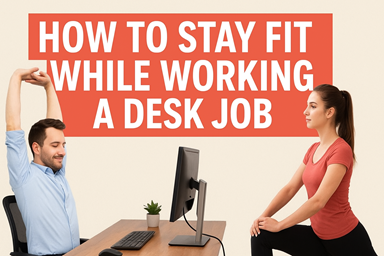
Even if you can’t hit the gym daily, small exercises at your desk can make a huge difference:
- Seated Stretches
- Shoulder rolls, neck stretches, and seated twists reduce stiffness.
- Desk Yoga
- Poses like seated cat-cow or seated forward bends improve flexibility and circulation.
- Standing or Walking Breaks
- Stand up every hour for 5 minutes, walk to the water cooler, or stretch in the hallway.
These small movements help combat the negative effects of prolonged sitting.
Incorporating Physical Activity Into Your Daily Routine
Making movement a habit is key:
- Walking Meetings: Suggest walking with colleagues instead of sitting in a conference room.
- Use Stairs: Opt for stairs instead of elevators to increase daily activity.
- Short Workouts: Even 10–15 minutes of bodyweight exercises in the morning or evening can boost fitness.
Nutrition Tips for Desk Workers
Eating smart is essential for staying fit:
- Healthy Snacks: Nuts, fruits, and yogurt keep energy levels steady.
- Balanced Lunches: Include lean proteins, whole grains, and vegetables.
- Stay Hydrated: Keep a water bottle at your desk; dehydration can reduce focus and energy.
Avoid processed snacks and sugary drinks that lead to energy crashes.
Time Management Strategies to Stay Active
Busy professionals can stay fit by planning carefully:
- Schedule Workouts: Treat exercise like a meeting you can’t miss.
- Micro-Breaks: Take 2–3 minute movement breaks every hour.
- Fitness Apps: Track activity and set reminders for walking or stretching.
Even small amounts of consistent activity add up over time.
Ergonomic Workspace Setup
Your workspace setup affects posture and overall health:
- Chair and Desk: Choose adjustable chairs and desks to maintain proper posture.
- Monitor Height: Screen should be at eye level to avoid neck strain.
- Standing Desks: Alternating between sitting and standing improves circulation and burns extra calories.
Mental Health and Fitness Connection
Staying fit isn’t just physical; mental health matters too:
- Stress Management: Practice deep breathing or mindfulness exercises to reduce stress.
- Meditation: Even 5 minutes a day can improve focus and calmness.
- Sleep: Quality sleep boosts metabolism, energy, and overall well-being.
Tracking Progress and Staying Motivated
Monitoring your progress helps maintain consistency:
- Fitness Trackers: Devices or apps can track steps, activity, and calories burned.
- Set Goals: Start with achievable targets like 5,000 steps a day and gradually increase.
- Accountability: Join online fitness groups or involve colleagues for motivation.
Practical Tips and Tricks for Long-Term Fitness
Consistency is key to staying fit:
- Combine exercises, nutrition, and ergonomic practices.
- Avoid overexertion; gradual progress is more sustainable.
- Celebrate small wins to stay motivated.
FAQs
1. Can I stay fit with just 10 minutes of daily exercise?
Yes! Short, high-intensity or focused workouts can improve strength and metabolism if done consistently every day. Combine with walking breaks for better results.
2. What are the best snacks to eat at my desk?
Opt for fruits, nuts, yogurt, or protein bars. Avoid sugary or processed snacks that cause energy crashes and weight gain.
3. How often should I take breaks from sitting?
Try standing or moving for 2–5 minutes every hour. Small micro-breaks prevent stiffness and boost circulation.
4. Is a standing desk necessary for fitness?
Not necessary, but alternating between sitting and standing reduces sedentary time, improves posture, and burns extra calories.
5. How can I stay motivated to exercise with a busy schedule?
Set realistic goals, track progress using apps, involve friends or colleagues, and reward yourself for consistency.
6. Are desk yoga exercises effective?
Yes, desk yoga improves flexibility, reduces stress, and helps prevent neck, shoulder, and back pain.
7. How important is hydration for desk workers?
Very important. Drinking enough water maintains energy, focus, and overall health, preventing fatigue and overeating.
8. Can walking meetings really help?
Absolutely. Walking meetings combine work with activity, improve creativity, and reduce sedentary time.