
Meta Title
Why the Body Feels Stiff After Sitting Too Long – Causes & Easy Fixes
Meta Description
Feeling stiff after sitting for long hours? Learn why prolonged sitting causes body stiffness, common symptoms, and simple daily tips to stay flexible and pain-free.
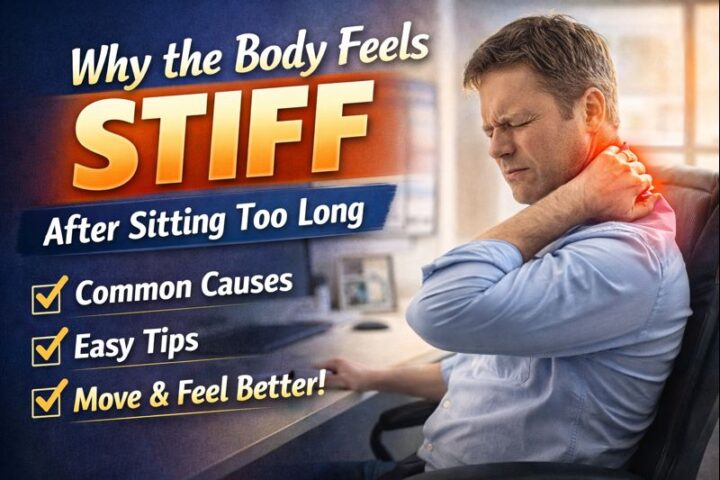
H1: Why the Body Feels Stiff After Sitting Too Long
Have you ever stood up after sitting for a long time and felt your back tight, legs heavy, or neck stiff?
This is a very common problem for people in the USA and UK, especially those who work desk jobs, drive long hours, or spend too much time on phones and laptops.
Body stiffness after sitting is not just uncomfortable—it’s your body’s way of saying it needs movement. In this article, we’ll explain why stiffness happens, what parts of the body are affected, and simple solutions that anyone can follow at home.
H2: What Does Body Stiffness Mean?
Body stiffness is the feeling of:
- Tight muscles
- Difficulty moving joints
- Temporary pain or discomfort when standing or walking
It often happens after:
- Sitting for 30 minutes or more
- Sitting in poor posture
- Sitting without breaks
This stiffness usually improves after moving, but if ignored, it can turn into chronic pain.
H2: Why Sitting Too Long Causes Body Stiffness
H3: Muscles Become Inactive
When you sit for long periods:
- Your muscles stop working properly
- Blood flow slows down
- Oxygen supply to muscles reduces
Inactive muscles become tight and weak, especially in:
- Hips
- Lower back
- Neck and shoulders
This is one of the biggest reasons your body feels stiff.
H3: Reduced Blood Circulation
Movement helps blood circulate smoothly.
When you sit too long:
- Blood pools in the lower body
- Muscles receive less nutrients
- Waste products build up
This causes heaviness, stiffness, and numbness, especially in the legs.
H3: Poor Sitting Posture
Many people sit:
- Slouched
- Leaning forward
- With rounded shoulders
Poor posture puts extra pressure on joints and muscles, leading to stiffness in:
- Neck
- Upper back
- Lower spine
Over time, this can lead to posture-related pain.
H3: Joint Lubrication Decreases
Joints need movement to stay healthy.
Sitting too long reduces the natural lubrication in joints, making them feel:
- Tight
- Hard to move
- Slightly painful
This is why your knees and hips feel stiff when you stand up.
H3: Hip Flexors Tighten
Hip flexors are muscles that help you bend and walk.
When you sit for hours:
- Hip flexors stay in a shortened position
- They become tight and stiff
Tight hip flexors pull on the lower back, causing lower back stiffness and pain.
H2: Common Areas Affected by Sitting Too Long
H3: Lower Back
- Most common stiffness area
- Caused by poor posture and weak core muscles
- Often felt when standing up suddenly
H3: Neck and Shoulders
- Head leaning forward increases strain
- Leads to tight neck muscles
- Can cause headaches
H3: Hips and Thighs
- Hip joints become stiff
- Difficulty walking after standing
H3: Knees and Ankles
- Reduced joint movement
- Feeling of tightness when walking
H2: Who Is Most at Risk?
People more likely to experience stiffness:
- Office workers
- Drivers
- Students
- Gamers
- People working from home
- Older adults
If you sit more than 6–8 hours daily, stiffness becomes very common.
H2: Simple Signs You’re Sitting Too Much
Watch out for these signs:
- Feeling stiff every time you stand
- Lower back pain by evening
- Neck tightness
- Reduced flexibility
- Feeling tired despite no heavy work
These are early warning signs.
H2: Easy Ways to Prevent Body Stiffness
H3: Take Movement Breaks Every 30 Minutes
Stand up and move every 30 minutes:
- Walk for 2–3 minutes
- Stretch arms and legs
This keeps muscles active and joints flexible.
H3: Improve Your Sitting Posture
Follow these posture tips:
- Keep feet flat on the floor
- Sit with a straight back
- Keep screen at eye level
- Relax shoulders
Good posture reduces muscle strain.
H3: Do Simple Desk Stretches
Try these easy stretches:
- Neck rolls
- Shoulder shrugs
- Seated leg extensions
- Spinal twists
Even 5 minutes helps a lot.
H3: Stay Hydrated
Dehydration makes muscles tight.
Drink enough water throughout the day to:
- Improve muscle function
- Reduce stiffness
- Support joint health
H3: Walk More During the Day
Add small movements:
- Walk while on calls
- Use stairs
- Park farther away
More movement = less stiffness.
H2: Morning Stiffness vs Sitting Stiffness
Morning stiffness:
- Happens after sleeping
- Improves with movement
Sitting stiffness:
- Happens after inactivity
- Worse with long sitting hours
Both improve with regular movement.
H2: Can Sitting Too Long Cause Long-Term Problems?
Yes, prolonged sitting may lead to:
- Chronic back pain
- Joint problems
- Poor posture
- Reduced mobility
That’s why early prevention is important.
H2: When Should You See a Doctor?
Seek medical advice if:
- Stiffness lasts all day
- Pain increases over time
- Numbness or tingling occurs
- Movement becomes difficult
These may indicate underlying issues.
H2: Simple Daily Routine to Stay Flexible
A basic routine:
- Morning: 5 minutes stretching
- Work hours: movement every 30 minutes
- Evening: light walk or stretching
Consistency matters more than intensity.
H2: FAQs – People Also Ask
Q1: Is it normal to feel stiff after sitting too long?
Yes, it is very common. Sitting reduces muscle activity and blood flow, which causes stiffness. Regular movement and stretching usually relieve it quickly.
Q2: How long should I sit before taking a break?
Experts recommend standing or moving every 30 minutes. Even short movement breaks help prevent stiffness and muscle tightness.
Q3: Can sitting too much cause permanent stiffness?
If ignored for years, prolonged sitting can lead to chronic stiffness and pain. However, early lifestyle changes can prevent long-term problems.
Q4: Why do my legs feel stiff after sitting?
Reduced blood circulation and inactive muscles cause leg stiffness. Walking and stretching help restore normal movement.
Q5: Does posture really affect stiffness?
Yes. Poor posture increases strain on muscles and joints, making stiffness worse. Proper sitting posture reduces discomfort.
Q6: Can exercise help reduce sitting stiffness?
Regular exercise improves flexibility, strength, and blood flow, making your body less prone to stiffness from sitting.
Q7: Is stiffness a sign of poor health?
Occasional stiffness is normal, but frequent stiffness may indicate inactivity, poor posture, or muscle imbalance.
Q8: Are older people more affected by sitting stiffness?
Yes, aging reduces joint flexibility, making older adults more prone to stiffness if they sit too long.
Q9: Can hydration reduce body stiffness?
Yes, staying hydrated supports muscle and joint health, reducing tightness and discomfort.
Q10: What is the fastest way to relieve stiffness?
Standing up, walking, gentle stretching, and deep breathing are the quickest ways to relieve stiffness.