

Meta Title: Why Overthinking Makes You Physically Tired | Mind–Body Health Guide
Meta Description: Discover why overthinking drains your energy and makes your body feel tired. Learn the science behind mental fatigue, symptoms, and practical ways to recover your energy naturally.
Introduction: When Thinking Too Much Becomes Exhausting
Have you ever wondered why you feel physically tired even after resting, sleeping well, or doing nothing strenuous?
One of the most overlooked reasons is overthinking.
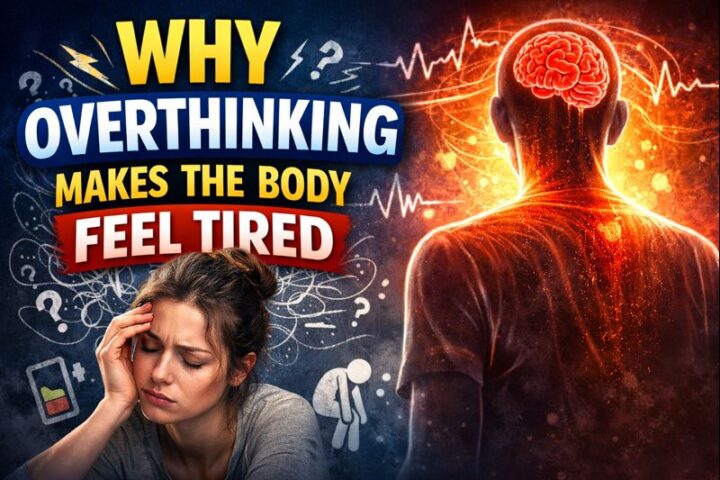
Overthinking is not just a mental habit—it has real physical consequences. When your mind is constantly analyzing, worrying, replaying conversations, or imagining worst-case scenarios, your body reacts as if it is under stress. Over time, this mental overload can leave you feeling drained, weak, heavy, and exhausted.
In this article, we’ll explore why overthinking makes the body feel tired, how it affects your brain and nervous system, common symptoms, and science-backed ways to break the cycle and restore your energy.
What Is Overthinking?
Overthinking happens when your mind repeatedly focuses on the same thoughts without reaching a solution. These thoughts are often:
- Negative or fear-based
- Related to the past or future
- Emotionally charged
- Difficult to control
Common Types of Overthinking
- Rumination: Replaying past mistakes or conversations
- Catastrophizing: Imagining worst-case scenarios
- Analysis paralysis: Overanalyzing decisions
- Excessive worry: Constant fear about future outcomes
While thinking is necessary, constant thinking without resolution becomes mental stress.
The Mind–Body Connection: Why Thoughts Affect Physical Energy
The brain and body are deeply connected. Your body does not differentiate between physical danger and mental stress.
When you overthink, your brain activates the stress response system, also known as the fight-or-flight response.
What Happens During Mental Stress?
- Stress hormones are released
- Muscles tense up
- Heart rate increases
- Energy is redirected for “survival”
If this happens occasionally, it’s normal.
If it happens all day, every day, it becomes exhausting.
How Overthinking Activates the Stress Response
Overthinking signals your brain that something is wrong—even if there isn’t.
Key Stress Hormones Involved
- Cortisol: The main stress hormone
- Adrenaline: Keeps the body alert and tense
Chronic overthinking causes continuous cortisol release, which leads to:
- Energy depletion
- Poor muscle recovery
- Fatigue and burnout
Your body stays in a constant alert mode, preventing true rest.
Why Mental Fatigue Turns Into Physical Tiredness
Mental fatigue and physical fatigue are closely linked.
Reasons Overthinking Causes Physical Exhaustion
- Brain uses 20% of the body’s energy
- Constant thinking burns glucose rapidly
- Muscles stay slightly contracted
- Nervous system remains overstimulated
Over time, this results in:
- Heavy limbs
- Body aches
- Low stamina
- Weakness without physical exertion
Thinking too much is like running a marathon inside your brain.
The Role of the Nervous System in Overthinking
Your autonomic nervous system has two main parts:
1. Sympathetic Nervous System (Stress Mode)
- Activated during overthinking
- Increases alertness
- Drains energy
2. Parasympathetic Nervous System (Rest Mode)
- Responsible for recovery
- Healing and relaxation
Overthinking keeps the body stuck in stress mode, preventing proper recovery—even during sleep.
Overthinking and Poor Sleep Quality
Many people who overthink complain of:
- Difficulty falling asleep
- Light or broken sleep
- Waking up tired
Why This Happens
- Racing thoughts prevent deep sleep
- Cortisol blocks melatonin (sleep hormone)
- Brain doesn’t “shut down” at night
Even if you sleep 7–8 hours, mental rest is missing, leading to morning fatigue.
Muscle Tension: A Hidden Cause of Tiredness
Overthinking often causes unconscious muscle tension, especially in:
- Neck
- Shoulders
- Jaw
- Lower back
Holding tension for hours reduces blood flow and oxygen to muscles, causing:
- Muscle fatigue
- Pain and stiffness
- Heavy body sensation
This is why stress-related tiredness feels different from normal tiredness.
Overthinking, Anxiety, and Energy Drain
Overthinking is closely linked to anxiety.
Anxiety Increases Energy Consumption
- Heart rate stays elevated
- Breathing becomes shallow
- Brain scans for threats
This constant alertness burns energy without physical movement, leaving you exhausted.
Digestive Impact: Why Your Body Feels Heavy
Stress from overthinking affects digestion too.
Effects on Gut Health
- Slower digestion
- Poor nutrient absorption
- Gut inflammation
Since digestion plays a major role in energy production, poor gut function results in:
- Lethargy
- Brain fog
- Physical weakness
Hormonal Imbalance Caused by Chronic Overthinking
Long-term overthinking can disturb hormonal balance.
Hormones Affected
- Cortisol (stress hormone)
- Insulin (blood sugar control)
- Thyroid hormones (metabolism)
Imbalance leads to:
- Low energy levels
- Weight changes
- Mood swings
Signs That Overthinking Is Making You Tired
You may be experiencing mental-induced fatigue if you notice:
- Feeling tired without physical work
- Body aches with no medical cause
- Low motivation
- Brain fog
- Heavy eyes or head
- Irritability
- Weak immunity
Why Rest Alone Doesn’t Fix This Tiredness
Physical rest helps the body—but mental stress remains active.
Watching TV, scrolling social media, or lying down does not calm the mind.
True recovery requires mental relaxation.
How to Stop Overthinking and Restore Energy
1. Practice Mindful Breathing
Slow breathing activates the parasympathetic nervous system.
Simple technique:
- Inhale for 4 seconds
- Hold for 4 seconds
- Exhale for 6 seconds
Repeat for 5 minutes.
2. Limit Mental Overload
- Avoid multitasking
- Reduce social media consumption
- Set thinking time limits
Your brain needs quiet time to recover.
3. Move Your Body Gently
Light movement helps release stress hormones.
Best options:
- Walking
- Stretching
- Yoga
4. Write Your Thoughts Down
Journaling clears mental clutter and reduces rumination.
- Write worries once
- Don’t reread repeatedly
- Close the notebook and move on
5. Improve Sleep Hygiene
- Avoid screens before bed
- Keep a fixed sleep schedule
- Practice relaxation techniques
Quality sleep restores both mental and physical energy.
6. Fuel Your Brain Properly
Overthinking burns nutrients.
Focus on:
- Protein
- Healthy fats
- Magnesium-rich foods
- Adequate hydration
When to Seek Professional Help
If overthinking causes:
- Chronic fatigue
- Panic attacks
- Depression
- Inability to function
Consult a mental health professional. Addressing the root cause prevents long-term burnout.
Final Thoughts: Calm Mind, Energized Body
Overthinking is not harmless. It silently drains your energy, disrupts hormones, affects sleep, and leaves your body feeling tired—even when you do nothing physically.
The key to restoring energy isn’t more rest—it’s mental calmness.
When you learn to manage your thoughts, your body naturally follows with strength, clarity, and vitality.
FAQs: Overthinking and Physical Tiredness
1. Can overthinking really make you physically tired?
Yes. Overthinking activates the stress response, releases cortisol, and keeps the nervous system overstimulated. This continuous mental effort consumes energy, leading to physical tiredness, muscle tension, and fatigue even without physical activity.
2. Why do I feel tired after thinking too much?
Thinking excessively burns glucose in the brain and keeps stress hormones elevated. This prevents proper mental and physical recovery, causing exhaustion, brain fog, and body heaviness.
3. Can overthinking cause body pain and weakness?
Yes. Chronic overthinking leads to muscle tension, poor blood circulation, and nervous system imbalance. This can result in body aches, stiffness, weakness, and low stamina.
4. How long does it take to recover from mental fatigue?
Recovery depends on stress levels and lifestyle. Mild mental fatigue may improve within days, while chronic overthinking may require weeks of consistent stress management, better sleep, and relaxation practices.
5. Does overthinking affect sleep quality?
Absolutely. Overthinking increases cortisol levels, which interferes with melatonin production. This leads to difficulty falling asleep, frequent awakenings, and waking up feeling tired.
6. Is mental tiredness the same as physical tiredness?
They feel similar but have different causes. Mental tiredness comes from cognitive overload, while physical tiredness comes from muscle exertion. However, mental fatigue often turns into physical exhaustion.
7. Can exercise help reduce overthinking fatigue?
Yes. Gentle exercise like walking or yoga helps reduce cortisol levels, relax muscles, and activate the parasympathetic nervous system, improving energy and mental clarity.
8. What is the fastest way to calm an overthinking mind?
Deep breathing, grounding exercises, journaling, and limiting overstimulation are some of the fastest ways to calm the mind and reduce stress-related tiredness.