

Meta Title: Why Weight Increases Even When Eating Normally | Hidden Reasons Explained
Meta Description: Gaining weight despite eating normal food? Discover hidden reasons like metabolism, stress, hormones, sleep, and lifestyle habits that cause unexplained weight gain in USA & UK adults.
Many people feel frustrated when their weight increases even though they are eating normally. You may not be overeating, junk food might be limited, and portion sizes seem reasonable—yet the scale keeps going up. This situation is more common than you think, especially among adults in the USA and UK.
Weight gain is not always about how much you eat. It often depends on how your body responds to food, lifestyle habits, stress levels, hormones, sleep, and daily activity. In this article, we’ll break down the real reasons behind unexplained weight gain, using simple language and practical examples.
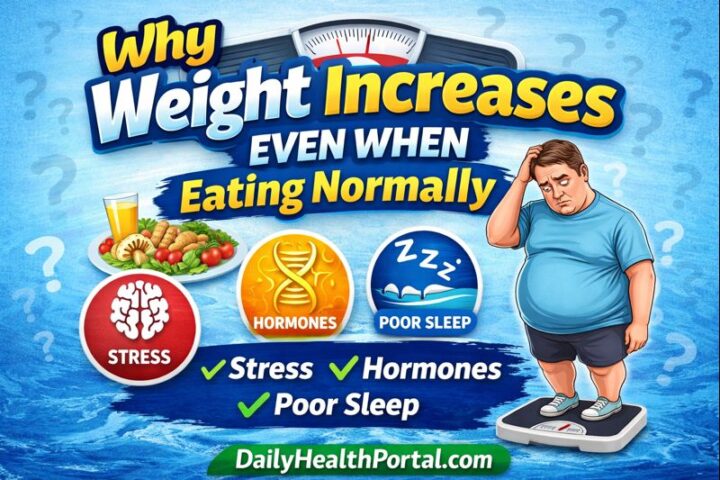
Understanding “Eating Normally” vs Actual Calorie Intake
Many people believe they are eating normally, but normal eating does not always mean balanced or calorie-appropriate.
Hidden Calories in Daily Foods
Even healthy foods can contribute to weight gain when consumed in excess:
- Cooking oils and butter
- Nuts, seeds, and nut butters
- Smoothies and fruit juices
- Sauces, dressings, and condiments
These foods are nutritious but calorie-dense, meaning small portions carry high calories.
Key takeaway: You may not be overeating meals, but extra calories sneak in unnoticed.
Slow Metabolism: A Major Hidden Factor
What Is Metabolism?
Metabolism is how your body converts food into energy. A slow metabolism means your body burns fewer calories at rest.
Causes of Slow Metabolism
- Aging (metabolism naturally slows after 30)
- Loss of muscle mass
- Sedentary lifestyle
- Chronic dieting or starvation diets
When metabolism slows, your body stores more calories as fat—even if food intake stays the same.
Hormonal Imbalances and Weight Gain
Hormones play a huge role in body weight regulation.
Common Hormones That Affect Weight
- Insulin: High insulin levels promote fat storage
- Cortisol: Stress hormone linked to belly fat
- Thyroid hormones: Control metabolic rate
- Estrogen & testosterone: Affect fat distribution
Even slight hormonal imbalance can cause weight gain without overeating.
Stress and Emotional Weight Gain
How Stress Makes You Gain Weight
Chronic stress raises cortisol levels, which:
- Increases appetite
- Promotes fat storage (especially abdominal fat)
- Triggers cravings for sugar and carbs
You may eat the same amount but store more fat due to stress hormones.
Modern life stress in the USA and UK—work pressure, financial stress, screen overload—plays a big role here.
Lack of Sleep and Weight Increase
Sleep affects hunger hormones directly.
Poor Sleep Disrupts Hunger Signals
- Ghrelin increases (makes you hungry)
- Leptin decreases (reduces fullness feeling)
This causes:
- Increased cravings
- Reduced fat burning
- Higher insulin resistance
Even with normal eating, poor sleep slows weight loss and promotes fat gain.
Muscle Loss and Reduced Physical Activity
Muscle Burns More Calories Than Fat
If you:
- Sit most of the day
- Avoid strength training
- Reduce daily movement
You lose muscle mass over time. Less muscle = lower daily calorie burn.
So the same food intake that once maintained your weight now leads to gradual weight gain.
Gut Health and Digestive Issues
Your gut bacteria influence how many calories you absorb.
Poor Gut Health Can Cause Weight Gain
- Imbalanced gut bacteria
- Frequent bloating and constipation
- Poor nutrient absorption
- Increased inflammation
An unhealthy gut can make your body store fat more efficiently, even with normal food intake.
Insulin Resistance and Blood Sugar Spikes
Insulin resistance is common due to:
- High refined carb intake
- Sedentary lifestyle
- Chronic stress
- Poor sleep
When cells stop responding to insulin, your body stores more fat—especially around the waist.
Result: Weight gain despite normal eating.
Water Retention vs Fat Gain
Sometimes weight gain is not fat, but water retention.
Causes of Water Weight
- High salt intake
- Hormonal changes
- Poor hydration
- Inflammation
- Certain medications
Water weight can fluctuate by 2–5 pounds, causing confusion and frustration.
Medications That Cause Weight Gain
Several common medications lead to gradual weight gain:
- Antidepressants
- Steroids
- Birth control pills
- Blood pressure medicines
- Thyroid medications (incorrect dosage)
If weight gain started after medication, it’s worth discussing alternatives with a healthcare provider.
Age-Related Weight Gain Explained
As we age:
- Muscle mass decreases
- Hormones shift
- Activity levels drop
This means calorie needs reduce, but eating habits often remain unchanged—leading to slow, steady weight gain.
Eating Frequency and Snacking Habits
You may eat “normal meals” but:
- Snack frequently
- Eat late at night
- Drink calories (coffee creamers, alcohol)
These small habits add up over time.
Why the Scale Goes Up Even When Diet Feels Normal
Weight is influenced by multiple factors, not just food quantity:
- Hormones
- Stress
- Sleep
- Activity
- Gut health
- Metabolism
That’s why focusing only on calories often doesn’t work.
Practical Tips to Stop Unexplained Weight Gain
Simple Lifestyle Adjustments
- Walk 7,000–10,000 steps daily
- Add strength training 2–3 times/week
- Sleep 7–8 hours nightly
- Reduce refined carbs and sugar
- Manage stress through breathing or meditation
Nutrition Tweaks
- Increase protein intake
- Eat more fibre-rich foods
- Control liquid calories
- Stay hydrated
Small changes create big long-term results.
When to Seek Medical Advice
Consult a healthcare professional if weight gain is:
- Rapid and unexplained
- Accompanied by fatigue or hair loss
- Linked to hormonal symptoms
- Persistent despite lifestyle changes
Early diagnosis prevents long-term health issues.
FAQs – Why Weight Increases Even When Eating Normally
1. Can stress alone cause weight gain without overeating?
Yes. Chronic stress increases cortisol, which promotes fat storage—especially around the abdomen—even if calorie intake remains unchanged.
2. Why do I gain weight as I age despite eating the same food?
Metabolism slows with age due to muscle loss and hormonal changes, so the same diet may lead to gradual weight gain.
3. Can poor sleep really affect body weight?
Absolutely. Poor sleep disrupts hunger hormones, increases cravings, and reduces fat burning, contributing to weight gain.
4. Is water retention responsible for sudden weight gain?
Yes. Hormones, salt intake, and dehydration can cause temporary water weight gain that appears as fat gain on the scale.
5. Does gut health affect body weight?
An unhealthy gut can increase inflammation and calorie absorption, making weight management harder even with normal eating.
6. Can insulin resistance cause weight gain?
Yes. Insulin resistance encourages fat storage and prevents effective calorie use, leading to weight gain.
7. Why does belly fat increase first?
Stress hormones and insulin resistance primarily store fat around the abdomen, making belly fat more noticeable.
8. Do medications really cause weight gain?
Some medications slow metabolism or increase appetite, leading to gradual weight gain over time.