Sleep is meant to be the body’s natural reset button. Yet for millions of people today, bedtime has become a source of stress rather than comfort. Instead of feeling relaxed, they feel tense, worried, and alert the moment their head touches the pillow. This growing problem is known as sleep anxiety.
Sleep anxiety is becoming increasingly common in the modern world, driven by stress, technology, lifestyle changes, and constant mental stimulation. This article explores why sleep anxiety is on the rise, how it affects physical and mental health, and science-backed ways to cope effectively.
What Is Sleep Anxiety?
Sleep anxiety is the fear, worry, or stress associated with falling asleep or staying asleep. It often involves racing thoughts, physical tension, and anticipation of poor sleep.
Unlike occasional sleepless nights, sleep anxiety creates a cycle of worry, where fear of not sleeping actually prevents sleep.
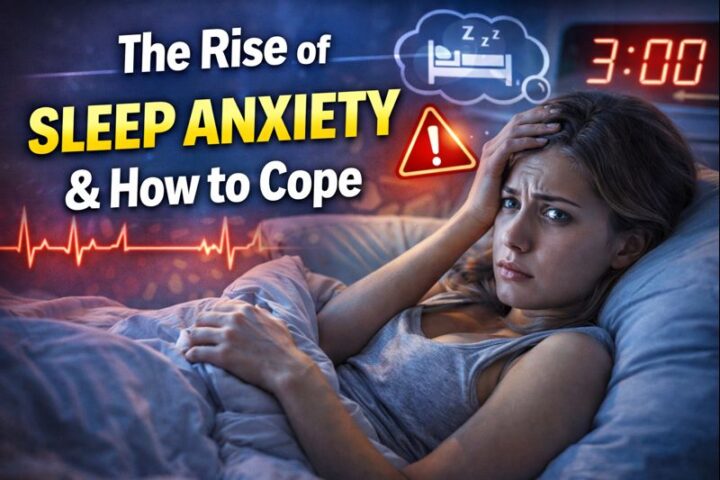
Why Sleep Anxiety Is Increasing Worldwide
Sleep anxiety has surged over the past decade, especially in the USA and UK.
Key Contributing Factors
- High work pressure and burnout
- Excessive screen time before bed
- Social media overstimulation
- Constant exposure to negative news
- Irregular sleep schedules
- Poor work-life boundaries
- Performance pressure around “perfect sleep”
Modern lifestyles rarely allow the mind to fully switch off.
The Role of Technology in Sleep Anxiety
Technology is one of the biggest drivers of sleep anxiety.
How Screens Trigger Anxiety
- Blue light suppresses melatonin
- Endless scrolling keeps the brain alert
- Notifications create subconscious stress
- Comparison culture increases worry
- Late-night information overload
Even passive screen use keeps the nervous system activated.
The Sleep Anxiety Cycle Explained
Sleep anxiety follows a predictable loop:
- One or two poor nights of sleep
- Worry about consequences the next day
- Increased pressure to sleep
- Heightened alertness at bedtime
- Difficulty falling asleep
- Reinforced fear of sleep
Over time, the bed itself becomes associated with stress.
Physical Symptoms of Sleep Anxiety
Sleep anxiety doesn’t just affect the mind—it impacts the body.
Common physical symptoms include:
- Racing heart
- Muscle tension
- Shallow breathing
- Sweating
- Restlessness
- Headaches
- Digestive discomfort
These symptoms are caused by overactivation of the stress response.
Mental and Emotional Effects
Mentally, sleep anxiety can feel overwhelming.
People often experience:
- Racing thoughts
- Fear of losing control
- Catastrophic thinking
- Irritability
- Low mood
- Reduced concentration
Poor sleep amplifies anxiety, creating a vicious cycle.
How Sleep Anxiety Affects Overall Health
Chronic sleep anxiety impacts multiple body systems.
Long-Term Health Effects
- Weakened immune system
- Hormonal imbalance
- Increased inflammation
- Weight gain
- Reduced cognitive performance
- Higher risk of anxiety disorders
- Cardiovascular stress
Sleep is foundational to health—disrupting it has wide-reaching effects.
Who Is Most at Risk?
Sleep anxiety can affect anyone, but certain groups are more vulnerable.
High-risk groups include:
- Professionals with high job stress
- Students facing academic pressure
- Shift workers
- Parents of young children
- People with anxiety disorders
- Heavy technology users
Awareness is the first step toward prevention.
Sleep Anxiety vs. Insomnia
Although related, sleep anxiety and insomnia are not identical.
Key Differences
- Insomnia focuses on inability to sleep
- Sleep anxiety focuses on fear of sleeping
Sleep anxiety often causes or worsens insomnia, but addressing anxiety can significantly improve sleep quality.
The Science Behind Sleep Anxiety
Sleep anxiety activates the sympathetic nervous system, responsible for “fight or flight.”
When this system is active:
- Heart rate increases
- Cortisol levels rise
- Muscles tense
- Brain remains alert
Sleep requires the opposite state—the parasympathetic nervous system, which promotes calm and relaxation.
How to Cope With Sleep Anxiety Effectively
The goal is not to force sleep, but to reduce pressure and calm the nervous system.
1. Remove the Pressure to Sleep
Trying too hard to sleep increases anxiety.
Helpful mindset shifts:
- Focus on rest, not sleep
- Accept wakefulness without panic
- Remind yourself that the body knows how to sleep
Paradoxically, letting go often leads to better sleep.
2. Create a Wind-Down Routine
A consistent pre-sleep routine signals safety to the brain.
Effective activities include:
- Reading a physical book
- Gentle stretching
- Warm shower or bath
- Calm music
- Journaling
Consistency matters more than duration.
3. Limit Screen Exposure Before Bed
Aim to reduce screens 60–90 minutes before sleep.
If unavoidable:
- Use blue-light filters
- Lower screen brightness
- Avoid emotionally stimulating content
Protecting melatonin production is critical.
4. Practice Breathing Techniques
Breathing directly calms the nervous system.
Simple Breathing Exercise
- Inhale through nose for 4 seconds
- Hold for 2 seconds
- Exhale slowly for 6 seconds
- Repeat for 5–10 minutes
This shifts the body into a relaxed state.
5. Get Out of Bed if Anxiety Spikes
Lying awake while anxious reinforces fear.
Instead:
- Get out of bed calmly
- Sit in dim light
- Do something relaxing
- Return to bed when sleepy
This retrains the brain to associate bed with calm.
6. Maintain a Regular Sleep Schedule
Consistency stabilizes the body clock.
Tips:
- Wake up at the same time daily
- Avoid sleeping in excessively
- Keep weekends within 1 hour of routine
Regularity builds sleep confidence.
7. Reduce Stimulants and Late Eating
Caffeine, sugar, and heavy meals worsen sleep anxiety.
Best practices:
- Avoid caffeine after early afternoon
- Eat lighter dinners
- Limit alcohol before bed
Nutrition plays a quiet but powerful role.
8. Move Your Body During the Day
Physical activity reduces nighttime anxiety.
Helpful activities:
- Walking
- Strength training
- Yoga
- Stretching
- Balance exercises
Daytime movement improves nighttime calm.
9. Challenge Sleep-Related Thoughts
Sleep anxiety is fueled by catastrophic thinking.
Common thoughts:
- “If I don’t sleep, tomorrow will be ruined”
- “I’ll never sleep normally again”
Replace with:
- “I can function even with less sleep”
- “This phase will pass”
Thoughts influence nervous system responses.
When to Seek Professional Help
If sleep anxiety persists for weeks or months, professional support can help.
Consider help if:
- Anxiety is severe
- Sleep fear dominates evenings
- Daily functioning is affected
- Panic symptoms occur at bedtime
Cognitive Behavioral Therapy for Insomnia (CBT-I) is highly effective.
Can Sleep Anxiety Be Fully Overcome?
Yes. Many people fully recover with:
- Behavioral changes
- Anxiety management
- Nervous system regulation
- Patience and consistency
Sleep anxiety is reversible, not permanent.
SEO Internal Linking Suggestions (DailyHealthPortal)
Internally link this article with:
- “How Technology Addiction Affects Sleep”
- “Natural Ways to Improve Sleep Quality”
- “How Stress Affects the Nervous System”
- “Best Evening Habits for Better Sleep”
Final Takeaway
Sleep anxiety is a growing modern health issue driven by stress, technology, and lifestyle imbalance. While it can feel overwhelming, it is highly manageable with the right approach.
By reducing pressure, calming the nervous system, and building healthy sleep habits, restful sleep can return naturally. Sleep is not something to force—it’s something to allow.
Frequently Asked Questions (FAQs)
1. What causes sleep anxiety?
Sleep anxiety is caused by stress, fear of not sleeping, overstimulation, irregular sleep habits, and negative associations with bedtime.
2. Is sleep anxiety a mental disorder?
Sleep anxiety is not always a disorder. It is a stress response that can improve with lifestyle changes and anxiety management.
3. Can sleep anxiety go away on its own?
Yes. Many cases resolve once sleep pressure is reduced and calming routines are established consistently.
4. Does sleep anxiety affect physical health?
Yes. Poor sleep increases inflammation, weakens immunity, disrupts hormones, and raises cardiovascular risk.
5. Are sleep medications helpful for sleep anxiety?
Medications may offer short-term relief but do not address the root cause. Behavioral approaches are more effective long-term.
6. How long does it take to recover from sleep anxiety?
Recovery time varies, but many people see improvement within a few weeks of consistent habit changes.
7. Can mindfulness help with sleep anxiety?
Yes. Mindfulness and relaxation techniques help calm the nervous system and reduce bedtime anxiety.