Meta Title
Simple Yoga Movements to Relax the Body at Home | Daily Health Portal
Meta Description
Discover simple yoga movements to relax your body at home. Reduce stress, improve flexibility, and calm your mind with beginner-friendly yoga poses for daily relaxation.
Introduction: Why Relaxation Is Essential for Modern Life
In today’s fast-paced world, stress, muscle tension, and mental fatigue have become part of daily life. Long working hours, excessive screen time, poor posture, and lack of movement slowly drain the body’s natural balance. This is where simple yoga movements to relax the body at home can make a powerful difference.
Yoga is not just about flexibility or fitness. It is a holistic practice that combines gentle movements, controlled breathing, and mindfulness to relax both the body and mind. The best part? You don’t need a gym, expensive equipment, or prior experience. A quiet corner of your home and a few minutes a day are enough.
This article will guide you through easy yoga movements for relaxation, explain their benefits, and show how to practice them safely at home—even if you are a complete beginner.
Benefits of Practicing Yoga at Home for Relaxation
Practicing yoga at home offers both physical and mental advantages, especially for people with busy schedules.
Key Benefits Include:
- Reduces stress and anxiety naturally
- Relieves muscle stiffness and body pain
- Improves posture and flexibility
- Calms the nervous system
- Enhances sleep quality
- Boosts energy without exhaustion
Unlike intense workouts, relaxation yoga focuses on slow, controlled movements that help the body release stored tension.
How Yoga Helps Relax the Body and Mind
Yoga works by activating the parasympathetic nervous system, also known as the “rest and digest” system. This helps slow down the heart rate, relax muscles, and reduce cortisol (stress hormone) levels.
Key elements that promote relaxation include:
- Gentle stretching
- Deep breathing (Pranayama)
- Mindful awareness
- Slow transitions
Together, these elements create a state of calm that benefits both mental and physical health.
Simple Yoga Movements to Relax the Body at Home
Below are beginner-friendly yoga movements that can be practiced safely at home. These poses require no prior yoga experience and are ideal for daily relaxation.
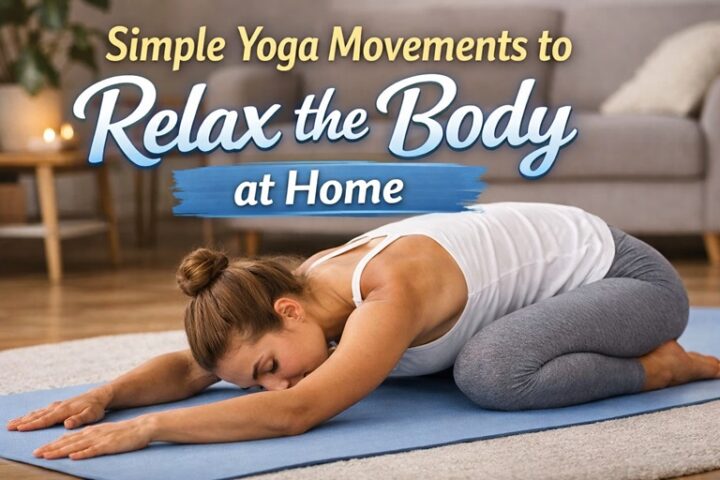
1. Child’s Pose (Balasana)
Why It Helps
Child’s Pose gently stretches the lower back, hips, and thighs while calming the mind.
How to Do It:
- Kneel on the floor and sit back on your heels
- Bend forward, resting your forehead on the mat
- Extend arms forward or keep them beside your body
- Breathe deeply for 1–2 minutes
Best for: Stress relief, back relaxation, mental calm
2. Cat-Cow Stretch (Marjaryasana–Bitilasana)
Why It Helps
This movement improves spinal flexibility and releases tension from the neck and shoulders.
How to Do It:
- Start on all fours
- Inhale, arch your back and lift your head (Cow Pose)
- Exhale, round your spine and tuck your chin (Cat Pose)
- Repeat slowly for 8–10 rounds
Best for: Spine health, posture improvement, relaxation
3. Seated Forward Bend (Paschimottanasana)
Why It Helps
This pose stretches the back and hamstrings while calming the nervous system.
How to Do It:
- Sit with legs extended straight
- Inhale and lengthen your spine
- Exhale and fold forward gently
- Hold for 30–60 seconds
Best for: Relaxing the nervous system, easing lower back tension
4. Legs Up the Wall Pose (Viparita Karani)
Why It Helps
One of the most relaxing yoga poses, it improves circulation and reduces fatigue.
How to Do It:
- Lie on your back near a wall
- Extend your legs up against the wall
- Relax arms by your sides
- Stay for 3–5 minutes
Best for: Stress relief, tired legs, better sleep
5. Supine Spinal Twist (Supta Matsyendrasana)
Why It Helps
This pose releases tension from the spine and massages internal organs.
How to Do It:
- Lie on your back
- Bend one knee and bring it across your body
- Extend arms and look to the opposite side
- Hold for 30 seconds on each side
Best for: Back relaxation, digestion, spinal mobility
6. Neck and Shoulder Rolls
Why It Helps
These gentle movements release tension caused by desk work and screen use.
How to Do It:
- Sit comfortably with a straight spine
- Slowly roll shoulders backward and forward
- Gently rotate your neck side to side
- Continue for 1–2 minutes
Best for: Neck stiffness, shoulder pain, relaxation
7. Deep Breathing (Diaphragmatic Breathing)
Why It Helps
Breathing techniques are essential for calming the mind and body.
How to Do It:
- Sit or lie down comfortably
- Inhale deeply through your nose
- Expand your belly, not your chest
- Exhale slowly through the mouth
- Repeat for 5 minutes
Best for: Anxiety relief, emotional balance, focus
Creating a Relaxing Yoga Routine at Home
You don’t need long sessions. A 15–30 minute routine is enough for daily relaxation.
Sample Relaxation Yoga Flow:
- Child’s Pose – 2 minutes
- Cat-Cow – 5 minutes
- Seated Forward Bend – 2 minutes
- Supine Twist – 3 minutes
- Legs Up the Wall – 5 minutes
- Deep Breathing – 5 minutes
Consistency matters more than intensity.
Best Time to Practice Yoga for Relaxation
Yoga for relaxation can be practiced at any time, but certain moments are more effective.
Ideal times include:
- Early morning for a calm start
- Evening to release daily stress
- Before bedtime for better sleep
Choose a time when you can practice without interruptions.
Tips for Practicing Yoga Safely at Home
To avoid strain or injury, keep these tips in mind:
- Move slowly and mindfully
- Never force a stretch
- Focus on breathing
- Use a yoga mat or soft surface
- Stop if you feel pain
Listening to your body is key to a safe yoga practice.
Yoga vs Other Relaxation Techniques
While meditation and stretching are helpful, yoga combines multiple benefits:
| Technique | Physical | Mental | Breath |
|---|---|---|---|
| Stretching | ✅ | ❌ | ❌ |
| Meditation | ❌ | ✅ | ✅ |
| Yoga | ✅ | ✅ | ✅ |
This makes yoga one of the most effective tools for full-body relaxation.
Internal Linking Suggestions (for dailyhealthportal.com)
- Benefits of Daily Yoga Practice
- Morning Yoga Routine for Beginners
- Yoga for Stress and Anxiety Relief
- Breathing Exercises for Mental Calm
These internal links can improve SEO and user engagement.
Frequently Asked Questions (FAQs)
1. Can beginners practice yoga movements at home?
Yes, beginners can safely practice simple yoga movements at home. Start with gentle poses, focus on breathing, and avoid forcing stretches. Even 10–15 minutes daily can help relax the body and improve flexibility over time.
2. How often should I do yoga for relaxation?
For best results, practice relaxation yoga at least 4–5 times per week. Daily practice is ideal, especially if you experience stress, muscle tension, or poor sleep. Consistency matters more than session length.
3. Is yoga effective for stress and anxiety relief?
Yes, yoga is highly effective for reducing stress and anxiety. Gentle movements combined with deep breathing calm the nervous system, lower cortisol levels, and promote emotional balance naturally.
4. Do I need equipment to practice yoga at home?
No special equipment is required. A yoga mat or soft surface is enough. Comfortable clothing and a quiet space help create a relaxed environment for your practice.
5. Can yoga help improve sleep quality?
Yes, relaxation yoga before bedtime can significantly improve sleep quality. Poses like Legs Up the Wall and deep breathing help calm the mind and prepare the body for restful sleep.
6. How long should a relaxation yoga session be?
A relaxation yoga session can last anywhere from 10 to 30 minutes. Even short sessions are effective if practiced consistently and mindfully.
Final Thoughts
Practicing simple yoga movements to relax the body at home is one of the easiest and most natural ways to improve overall well-being. With no equipment, no cost, and minimal time commitment, yoga fits perfectly into modern lifestyles.
Whether you want to reduce stress, release muscle tension, or simply feel calmer, these gentle yoga movements can transform how your body and mind feel—one breath at a time.