Meta Title: Easy Breathing Exercises to Reduce Daily Stress Naturally
Meta Description: Discover easy breathing exercises to reduce daily stress, calm your mind, improve focus, and boost overall health. Simple techniques you can practice anytime, anywhere.
Introduction: Why Breathing Matters More Than You Think
In today’s fast-paced lifestyle, daily stress has become unavoidable. Work pressure, screen time, lack of sleep, and constant notifications keep the body in a state of tension. While many people turn to caffeine, medications, or distractions, one of the most powerful stress-relief tools is already within you — your breath.
Breathing exercises are simple, free, and scientifically proven ways to calm the nervous system. When practiced regularly, they help reduce anxiety, improve focus, lower blood pressure, and enhance overall mental and physical health.
This article covers easy breathing exercises to reduce daily stress, suitable for beginners and busy individuals. No equipment, no gym — just a few minutes of mindful breathing.
How Stress Affects Your Body and Breathing
Stress triggers the fight-or-flight response, causing:
- Rapid, shallow breathing
- Increased heart rate
- Muscle tension
- Mental restlessness
Over time, this pattern becomes habitual, leading to chronic stress, fatigue, poor sleep, and anxiety.
The Role of Breathing in Stress Control
Breathing directly influences the autonomic nervous system. Slow, deep breathing activates the parasympathetic system, which signals the body to relax.
Key benefits of controlled breathing:
- Lowers cortisol (stress hormone)
- Calms the mind
- Improves oxygen flow
- Enhances emotional regulation
Benefits of Breathing Exercises for Daily Stress Relief
Regular breathing exercises offer both short-term and long-term benefits.
Physical Benefits
- Reduced heart rate and blood pressure
- Better lung capacity
- Improved digestion
- Relaxed muscles
Mental & Emotional Benefits
- Reduced anxiety and panic
- Improved focus and clarity
- Better emotional balance
- Enhanced sleep quality
Best Time to Practice Breathing Exercises
You can practice breathing exercises anytime, but these moments are especially effective:
- Morning (to start the day calmly)
- During work breaks
- Before sleep
- During anxiety or panic episodes
- After workouts or physical exertion
Even 5–10 minutes daily can make a noticeable difference.
Easy Breathing Exercises to Reduce Daily Stress
Below are simple, beginner-friendly breathing techniques that you can practice anywhere.
1. Deep Belly Breathing (Diaphragmatic Breathing)
Deep belly breathing is one of the most effective ways to reduce stress naturally.
How to Do It:
- Sit or lie down comfortably
- Place one hand on your chest, one on your belly
- Inhale slowly through your nose
- Let your belly rise (not your chest)
- Exhale slowly through your mouth
- Repeat for 5–10 minutes
Why It Works:
- Activates relaxation response
- Improves oxygen exchange
- Reduces muscle tension
2. Box Breathing (4-4-4-4 Method)
Used by athletes and professionals, box breathing helps reset the nervous system quickly.
Steps:
- Inhale for 4 seconds
- Hold for 4 seconds
- Exhale for 4 seconds
- Hold for 4 seconds
- Repeat 4–6 cycles
Best For:
- Work stress
- Mental overload
- Anxiety control
3. 4-7-8 Breathing Technique
This technique is excellent for stress reduction and better sleep.
How to Practice:
- Inhale through nose for 4 seconds
- Hold breath for 7 seconds
- Exhale through mouth for 8 seconds
- Repeat 3–5 times
Benefits:
- Slows heart rate
- Reduces anxiety
- Improves sleep quality
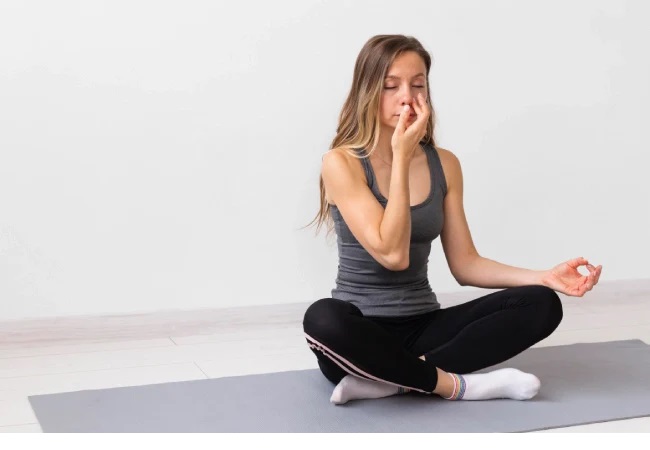
4. Alternate Nostril Breathing (Calming Breath)
This balanced breathing method helps clear the mind and reduce emotional stress.
Steps:
- Close right nostril, inhale through left
- Close left nostril, exhale through right
- Inhale through right
- Exhale through left
- Continue for 5 minutes
Ideal For:
- Mental fatigue
- Emotional imbalance
- Focus improvement
5. Slow Counting Breaths
One of the easiest breathing exercises for beginners.
Method:
- Inhale for 5 seconds
- Exhale for 5 seconds
- Count mentally
- Continue for 3–10 minutes
Why It Helps:
- Brings awareness to breathing
- Reduces racing thoughts
- Promotes calmness
6. Mindful Breathing Practice
Mindful breathing focuses on present-moment awareness.
How to Do It:
- Sit quietly
- Focus only on your breath
- Observe inhale and exhale
- If thoughts arise, gently return to breathing
Key Benefit:
- Improves emotional control
- Reduces stress reactivity
How Often Should You Practice?
For best results:
- Daily practice: 5–15 minutes
- During stress: Anytime needed
- Consistency matters more than duration
Common Mistakes to Avoid
Avoid these errors to get maximum benefits:
- Forcing the breath
- Breathing too fast
- Practicing with poor posture
- Expecting instant results
Tip: Keep breathing slow, gentle, and relaxed.
Breathing Exercises vs Other Stress Relief Methods
| Method | Cost | Time | Effectiveness |
|---|---|---|---|
| Breathing Exercises | Free | Low | High |
| Meditation Apps | Paid | Medium | Medium |
| Medication | High | Long-term | Variable |
| Exercise | Medium | High | High |
Breathing exercises are accessible, fast, and safe for most people.
Who Can Benefit Most?
Breathing exercises are ideal for:
- Office workers
- Students
- Parents
- Athletes
- Seniors
- Anyone dealing with daily stress
Internal Linking Suggestions (For SEO)
To boost engagement and SEO, consider linking internally to:
- “Best Natural Ways to Reduce Stress”
- “Morning Habits for Mental Wellness”
- “How Sleep Affects Mental Health”
- “Simple Meditation Techniques for Beginners”
Final Thoughts
Learning easy breathing exercises to reduce daily stress is one of the smartest health investments you can make. These techniques require no equipment, no special skills, and very little time — yet they offer powerful mental and physical benefits.
By practicing just a few minutes daily, you can feel calmer, more focused, and better equipped to handle life’s challenges.
Frequently Asked Questions (FAQs)
1. How long does it take for breathing exercises to reduce stress?
Most people feel calmer within 2–5 minutes of slow breathing. Long-term stress reduction typically appears after 1–2 weeks of daily practice, as the nervous system becomes more balanced and responsive.
2. Can breathing exercises help with anxiety attacks?
Yes, controlled breathing can reduce anxiety symptoms quickly. Techniques like box breathing and deep belly breathing help slow the heart rate and calm the nervous system during anxiety or panic episodes.
3. Are breathing exercises safe for everyone?
Breathing exercises are generally safe for most people. However, individuals with respiratory or cardiac conditions should consult a healthcare professional before practicing advanced breath-holding techniques.
4. Can I practice breathing exercises at work?
Absolutely. Many breathing exercises are silent and discreet, making them perfect for work breaks, meetings, or stressful situations without drawing attention.
5. What is the best breathing exercise for daily stress?
Deep belly breathing and slow counting breaths are considered best for daily stress relief, especially for beginners, as they are simple and effective.
6. Do breathing exercises improve sleep quality?
Yes. Techniques like 4-7-8 breathing relax the body and mind, making it easier to fall asleep and improving overall sleep quality.
7. How many times a day should I do breathing exercises?
Practicing once or twice daily is enough for most people. You can also use breathing exercises whenever you feel stressed or overwhelmed.