

Meta Title
Why Lack of Movement Causes Daily Body Pain | Health & Fitness Guide
Meta Description
Discover why lack of movement causes daily body pain, stiffness, and fatigue. Learn how inactivity affects muscles, joints, posture, and circulation—and how simple daily movement can relieve pain naturally.
Introduction: The Silent Cause Behind Everyday Body Pain
Daily body pain has become a common complaint among people in the USA and UK. From morning stiffness and lower back pain to tight shoulders and sore joints, many adults experience discomfort even without injury. While aging, stress, and posture are often blamed, one major hidden cause is frequently overlooked—lack of movement.
Modern lifestyles encourage prolonged sitting, minimal physical activity, and repetitive habits. Over time, this inactivity quietly weakens the body, leading to pain that feels sudden but is actually built up over months or years. Understanding why lack of movement causes daily body pain is the first step toward long-term relief and better health.
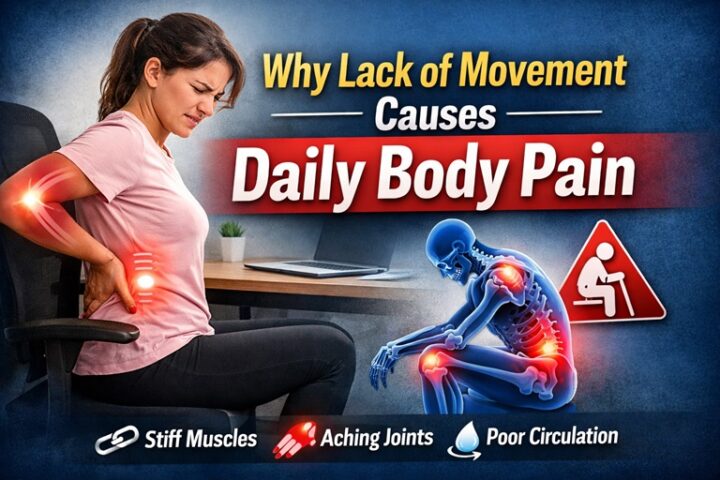
What Does “Lack of Movement” Really Mean?
Lack of movement does not mean complete physical inactivity. Even people who exercise for 30 minutes a day can still suffer from movement deficiency if they:
- Sit for long hours at work
- Spend excessive time on screens
- Avoid stretching or mobility exercises
- Repeat the same movements daily
This condition is often referred to as sedentary behavior, and it affects muscles, joints, circulation, and even the nervous system.
How the Human Body Is Designed to Move
The human body is engineered for regular movement. Muscles, joints, and connective tissues rely on motion to stay healthy. When movement is reduced:
- Muscles lose strength and flexibility
- Joints become stiff and dry
- Blood circulation slows down
- Nerves become more sensitive to pain
Without movement, the body starts to break down instead of rebuild, leading to chronic aches and pains.
How Lack of Movement Causes Muscle Pain
Muscle Tightness and Shortening
When muscles remain inactive for long periods, they begin to shorten and tighten. This is especially common in:
- Neck and shoulders
- Lower back
- Hip flexors
- Hamstrings
Tight muscles pull on joints and restrict normal motion, causing discomfort even during simple activities like walking or bending.
Muscle Weakness and Imbalance
Inactivity weakens muscles that support posture and movement. At the same time, overused muscles become tense. This imbalance leads to:
- Poor body alignment
- Increased strain on joints
- Muscle fatigue and soreness
Over time, the body compensates in unhealthy ways, resulting in persistent pain.
Joint Pain and Stiffness from Inactivity
Reduced Joint Lubrication
Joints rely on movement to distribute synovial fluid, which acts as a natural lubricant. When movement decreases:
- Joints dry out
- Friction increases
- Stiffness and pain develop
This is why joint pain often feels worse in the morning or after sitting for long periods.
Increased Risk of Arthritis Symptoms
While inactivity does not directly cause arthritis, it worsens joint degeneration. Lack of movement reduces joint nourishment, accelerating wear and tear, especially in the knees, hips, and spine.
Poor Circulation and Its Role in Body Pain
Movement plays a key role in blood circulation. When you move, muscles help pump blood throughout the body. Without regular movement:
- Oxygen delivery decreases
- Toxins build up in tissues
- Muscles fatigue more quickly
Poor circulation contributes to muscle soreness, swelling, and nerve sensitivity, all of which increase daily body pain.
How Sitting Too Much Triggers Chronic Pain
Lower Back Pain
Prolonged sitting places excessive pressure on the spine and weakens core muscles. This leads to:
- Disc compression
- Reduced spinal flexibility
- Chronic lower back pain
Neck and Shoulder Pain
Looking down at screens or maintaining poor posture strains neck muscles. Over time, this causes:
- Muscle knots
- Tension headaches
- Reduced neck mobility
Lack of Movement and Poor Posture
Inactivity encourages poor posture habits such as slouching or forward head posture. Poor posture:
- Misaligns the spine
- Overloads certain muscles
- Compresses nerves
This results in pain that often spreads from one area to another, making the discomfort feel widespread and hard to pinpoint.
The Connection Between Inactivity and Inflammation
Physical movement helps regulate inflammation. When movement is limited:
- Inflammatory markers increase
- Muscles recover more slowly
- Pain sensitivity rises
Chronic low-grade inflammation can make everyday movements painful and exhausting.
Mental Health, Stress, and Pain Sensitivity
Lack of movement also affects mental health. Physical inactivity is linked to:
- Increased stress levels
- Anxiety and low mood
- Poor sleep quality
Stress heightens pain perception, meaning the body feels pain more intensely even without physical damage.
Why Pain Gets Worse with Age Without Movement
As we age, muscle mass naturally declines. Without regular movement:
- Muscle loss accelerates
- Joint flexibility decreases
- Balance and coordination weaken
This makes older adults more prone to stiffness, falls, and chronic pain. However, regular movement can slow or even reverse many of these effects.
Signs Your Body Pain Is Caused by Lack of Movement
You may be experiencing movement-related pain if:
- Pain improves after light activity
- Stiffness worsens after rest
- Discomfort shifts between body parts
- Pain appears without injury
Recognizing these signs can help you address the root cause instead of masking symptoms.
How Simple Daily Movement Reduces Body Pain
Improves Muscle Flexibility
Gentle stretching and regular movement keep muscles long and flexible, reducing tension and soreness.
Strengthens Support Muscles
Movement activates stabilizing muscles that protect joints and improve posture.
Enhances Circulation
Even short walks increase blood flow, delivering oxygen and nutrients to painful areas.
Practical Tips to Add More Movement to Your Day
You don’t need intense workouts to reduce pain. Small changes can make a big difference:
- Stand up every 30–60 minutes
- Take short walking breaks
- Stretch your neck, shoulders, and hips
- Use stairs instead of elevators
- Practice gentle mobility exercises
Consistency matters more than intensity.
Best Types of Movement for Daily Pain Relief
- Walking – Improves circulation and joint mobility
- Stretching – Reduces muscle tightness
- Yoga or Pilates – Enhances flexibility and posture
- Strength training – Supports joints and spine
- Low-impact exercises – Protects joints while staying active
Preventing Future Pain Through an Active Lifestyle
Regular movement helps prevent:
- Chronic muscle stiffness
- Joint degeneration
- Posture-related pain
- Stress-induced discomfort
An active lifestyle keeps the body resilient, flexible, and pain-resistant.
Internal Linking Suggestions (For Website Use)
- Link to articles on benefits of daily stretching
- Link to guides on posture correction exercises
- Link to posts about sedentary lifestyle risks
(These improve user engagement and SEO structure.)
FAQs: Lack of Movement and Daily Body Pain
1. Can lack of movement really cause body pain even without injury?
Yes. Prolonged inactivity leads to muscle stiffness, joint dryness, poor circulation, and posture issues. These factors create pain even without physical injury. Regular movement helps restore flexibility and reduce discomfort naturally.
2. Why does my body hurt more after sitting all day?
Sitting for long periods compresses the spine, weakens muscles, and reduces blood flow. This leads to stiffness and soreness, especially in the lower back, neck, and hips, making pain more noticeable by the end of the day.
3. How much movement is needed to prevent daily body pain?
Even light movement every 30–60 minutes can help. Short walks, stretching, and posture changes throughout the day are often enough to reduce stiffness and prevent pain caused by inactivity.
4. Is exercise better than rest for body pain caused by inactivity?
Yes. Gentle exercise improves circulation, loosens tight muscles, and supports joints. Rest alone may worsen stiffness, while controlled movement helps the body heal and function better.
5. Can walking daily reduce chronic body pain?
Daily walking improves joint mobility, strengthens muscles, and boosts circulation. It is one of the simplest and most effective ways to reduce pain caused by lack of movement.
6. Does lack of movement increase inflammation in the body?
Yes. Physical inactivity is linked to higher inflammation levels. Movement helps regulate inflammatory responses, reducing pain sensitivity and supporting overall health.
7. Why does pain feel worse in the morning?
During sleep, the body remains still for hours, causing joints to stiffen and muscles to tighten. Morning movement helps re-lubricate joints and ease stiffness.
Final Thoughts
Lack of movement is one of the most underestimated causes of daily body pain. In a world dominated by screens and sitting, the body slowly adapts in unhealthy ways. The good news is that pain caused by inactivity is often reversible.
By adding consistent, gentle movement into your daily routine, you can reduce pain, improve flexibility, and regain comfort naturally—without medication or invasive treatments.