
You eat clean all week. Calories are tracked, workouts are done, and discipline stays strong from Monday to Friday. Then the weekend arrives—and suddenly everything changes. Pizza nights, restaurant meals, alcohol, desserts, and “cheat days” creep in. By Monday morning, the scale hasn’t moved—or worse, it’s gone up.
So why does weekend eating ruin weekly diet progress so easily?
This article explains the science, psychology, and real-world reasons behind weekend overeating, how it impacts fat loss and metabolism, and most importantly—how to fix it without quitting your social life.
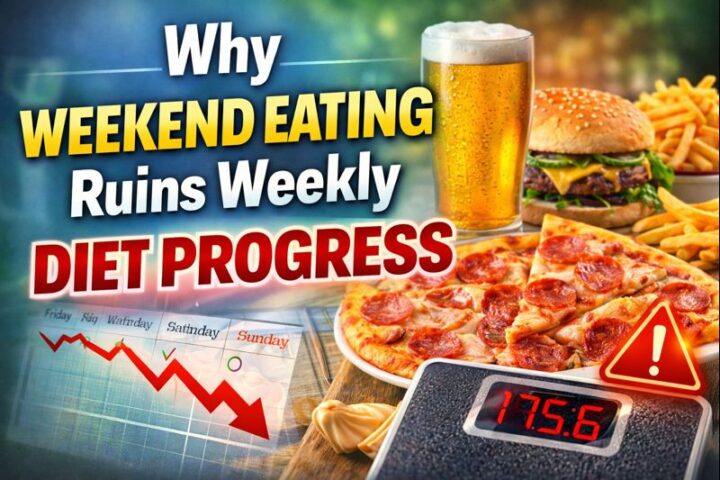
The Weekday Diet vs Weekend Reality
Most people follow two different eating patterns:
- Structured eating on weekdays
- Uncontrolled eating on weekends
This imbalance is one of the biggest hidden reasons why fat loss stalls despite consistent effort.
A Common Scenario
- Weekday calorie intake: 1,800 calories/day
- Weekend calorie intake: 3,000–4,000 calories/day
Just two high-calorie days can wipe out the entire weekly calorie deficit.
Calorie Surplus: The Main Diet Killer
Fat loss depends on one key principle:
You must stay in a calorie deficit over time.
How Weekends Cancel Progress
Let’s break it down simply:
- Weekday deficit: 500 calories × 5 days = 2,500 calorie deficit
- Weekend surplus: 1,500 calories × 2 days = 3,000 calorie surplus
Result?
👉 Net weekly surplus = weight gain, not fat loss.
Even if you “eat clean,” portion sizes and hidden calories matter.
Why Weekend Food Is So Calorie-Dense
Weekend meals are usually:
- High in refined carbs
- Loaded with added fats
- Low in fiber
- Extremely palatable
Examples include:
- Burgers, fries, pizza
- Alcoholic drinks
- Desserts and bakery items
- Restaurant portions
These foods make it very easy to overeat without feeling full.
Alcohol: The Silent Fat-Loss Saboteur
Alcohol is one of the biggest weekend diet destroyers.
Why Alcohol Hurts Fat Loss
- 7 calories per gram (almost as much as fat)
- Lowers fat oxidation
- Increases appetite
- Reduces food control
- Disrupts sleep and recovery
A few drinks can easily add 800–1,200 extra calories in one night—without any nutritional benefit.
Insulin Spikes and Fat Storage
Weekend binge eating often involves:
- Sugar
- White flour
- Sugary drinks
These foods cause rapid insulin spikes, pushing the body toward fat storage, especially after a week of dieting.
Your body becomes more efficient at storing fat when high-carb, high-fat meals are combined.
Water Weight vs Real Fat Gain
Many people panic after weekend weight gain—but not all of it is fat.
What Actually Happens
- High sodium → water retention
- High carbs → glycogen storage
- Inflammation → scale weight increase
However, some fat gain is real, especially after repeated weekends of overeating.
The “Cheat Day” Mental Trap
Cheat days often turn into:
- Cheat meals → cheat evenings → cheat weekends
Psychological Damage of Cheat Days
- All-or-nothing thinking
- Loss of food awareness
- Guilt and shame cycles
- Monday “reset” mindset
This pattern keeps people stuck in diet-start-diet-stop loops.
Weekend Eating and Metabolic Adaptation
After a week of calorie restriction, your body becomes more sensitive to calories.
What This Means
- Weekend overeating is stored more efficiently
- Fat storage increases
- Hunger hormones get disrupted
- Cravings intensify next week
This makes Monday-to-Friday dieting harder every week.
Social Eating and Portion Distortion
Restaurants and gatherings serve 2–3x normal portions.
You may think:
“I didn’t eat that much.”
But calorie-wise, you did.
Common weekend calorie traps:
- Sauces and dressings
- Cooking oils
- Shared snacks
- Sugary beverages
How Weekend Eating Affects Weekly Motivation
Repeated weekend setbacks cause:
- Frustration
- Scale obsession
- Diet fatigue
- Loss of confidence
People often blame:
- Their metabolism
- Their genetics
- Their workout plan
When the real issue is inconsistent calorie control.
Is Weekend Eating Always Bad?
No. The problem isn’t eating differently—it’s eating excessively.
Planned flexibility can actually help:
- Mental sustainability
- Social balance
- Long-term adherence
The key is control, not restriction.
Smart Strategies to Fix Weekend Diet Damage
1. Stop Using “Cheat Days”
Replace cheat days with:
- Planned higher-calorie meals
- Portion-controlled treats
- Flexible eating windows
2. Keep Protein High on Weekends
Protein:
- Reduces hunger
- Controls portions
- Preserves muscle mass
Aim for 25–35g protein per meal, even on weekends.
3. Track Weekends Loosely (Not Perfectly)
You don’t need perfection—just awareness.
Simple tracking:
- Estimate portions
- Avoid mindless snacking
- Watch liquid calories
4. Alcohol Moderation Rules
If drinking:
- Limit to 1–2 drinks
- Avoid sugary mixers
- Eat protein before drinking
Your body will thank you.
5. Maintain Some Routine
You don’t need full discipline—but keep:
- Regular meal times
- One workout
- Daily steps
Consistency beats extremes.
Weekend Dieting for Real Life
The goal is not to live like a robot.
The goal is to avoid undoing 5 days of effort in 2 days.
Fat loss happens when:
- Calories are controlled weekly
- Habits are repeatable
- Mindset is flexible
SEO Internal Linking Suggestions (DailyHealthPortal)
Internally link this article with:
- “Why Calorie Deficit Matters More Than Exercise”
- “Hidden Calories in Restaurant Food”
- “How Alcohol Affects Weight Loss”
- “Sustainable Dieting for Long-Term Results”
Final Takeaway
Weekend eating doesn’t ruin progress because it’s “bad.”
It ruins progress because it breaks calorie balance, consistency, and control.
Fix weekends—and fat loss becomes easier, faster, and sustainable.
Frequently Asked Questions (FAQs)
1. Can weekend overeating really cancel weekly fat loss?
Yes. Even two high-calorie days can completely eliminate a weekly calorie deficit. Fat loss depends on weekly consistency, not just weekday discipline.
2. Is one cheat day per week okay?
Occasional cheat meals are fine, but full cheat days often lead to overeating. Controlled flexibility works better than unrestricted eating.
3. Why does my weight increase after weekends?
Weekend weight gain is often a mix of water retention, glycogen storage, and sodium. However, repeated overeating can also lead to real fat gain.
4. Does alcohol slow weight loss?
Yes. Alcohol adds empty calories, increases appetite, reduces fat burning, and negatively affects sleep, all of which slow fat loss.
5. Should I diet harder on weekdays to balance weekends?
No. Over-restricting increases weekend binges. A moderate, sustainable weekday diet leads to better weekend control.
6. How can I enjoy weekends without ruining progress?
Plan meals, prioritize protein, limit alcohol, and avoid all-or-nothing thinking. Consistency matters more than perfection.
7. Are restaurant meals bad for dieting?
Not always, but restaurant meals are calorie-dense. Choosing grilled options, controlling portions, and avoiding sugary drinks helps maintain balance.