
Meta Title:
How to Strengthen Your Core Without Equipment – Effective At-Home Workouts
Meta Description:
Discover the best no-equipment core exercises you can do at home. Learn simple, effective, and beginner-friendly techniques to build a stronger core and improve stability, posture, and overall fitness.
H1: How to Strengthen Your Core Without Equipment
A strong core is essential for almost everything you do—from walking and lifting to improving posture and reducing back pain. The best part? You don’t need a gym membership, fancy machines, or any equipment at all. With simple bodyweight exercises, you can strengthen your core from the comfort of your home.
Whether you’re a beginner or someone restarting your fitness routine, these no-equipment techniques will help you build a stable, powerful, and healthy core.
H2: Why Core Strength Matters
Your core is made up of more than just your abs. It includes deep muscles around your stomach, back, hips, and pelvis. These muscles support your spine, help you move efficiently, and protect your body from injuries.
Benefits of a strong core:
- Better posture and alignment
- Improved balance and stability
- Reduced lower-back pain
- Enhanced workout performance
- Easier daily activities such as bending, lifting, or walking
- Lower risk of injuries
Strengthening your core without equipment is not only possible—it’s highly effective.
H2: Warm-Up Before Core Training
Before diving into the main exercises, warm your body for 3–5 minutes. A good warm-up increases blood flow, wakes up your muscles, and reduces injury risk.
Simple warm-up ideas:
- March in place – 30 seconds
- Arm circles – 20 seconds
- Side bends – 20 seconds
- Light jogging or high knees – 30 seconds
A quick warm-up primes your body for better performance.
H2: Best No-Equipment Core Exercises
These exercises target your entire core: upper abs, lower abs, obliques, deep stabilizing muscles, and lower back. All you need is a mat or a comfortable floor.
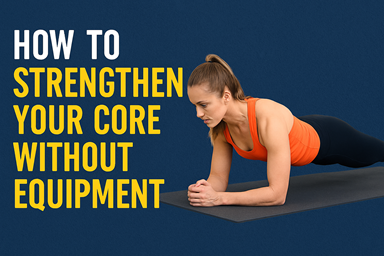
H3: 1. Plank (Standard Plank)
The plank is one of the best full-core exercises you can do anywhere.
How to do it:
- Place your forearms on the floor.
- Extend your legs straight behind you.
- Keep your body in a straight line.
- Hold the position without dropping your hips.
Beginners: 20–30 seconds
Advanced: 45–60 seconds
Why it works:
Strengthens deep core muscles, improves endurance, and stabilizes your spine.
H3: 2. Side Plank
Side planks target your obliques, helping you develop a strong and balanced core.
How to do it:
- Lie on one side with your legs stacked.
- Lift your body using your forearm.
- Keep your hips raised.
- Hold, then switch sides.
Beginners: 15–20 seconds
Advanced: 30–45 seconds
H3: 3. Dead Bug
This is great for strengthening deep core muscles without straining your back.
How to do it:
- Lie on your back with arms up.
- Lift your knees to a 90-degree angle.
- Extend opposite arm and leg at the same time.
- Alternate slowly.
Reps: 10–12 each side.
H3: 4. Glute Bridge
Although known as a glute exercise, this move activates your lower back and core muscles.
How to do it:
- Lie on your back.
- Bend your knees and keep feet flat.
- Lift your hips upward.
- Hold for 2 seconds and lower down.
Reps: 12–15
H3: 5. Bicycle Crunches
A simple but powerful ab exercise that targets your upper abs, lower abs, and obliques.
How to do it:
- Lie on your back.
- Lift your legs and move them like cycling.
- Touch your elbow to the opposite knee.
Reps: 12–20
H3: 6. Leg Raises
One of the best moves for lower abs.
How to do it:
- Lie flat on your back.
- Lift your legs slowly.
- Lower them without touching the floor.
Reps: 10–12
H3: 7. Mountain Climbers
This dynamic exercise strengthens your core while boosting your heart rate.
How to do it:
- Get into a plank position.
- Drive your knees toward your chest alternately.
- Maintain core tightness.
Time: 20–30 seconds
H3: 8. Flutter Kicks
A great move for lower abs and hip stabilizers.
How to do it:
- Lie on your back.
- Raise your legs slightly above the floor.
- Move them in small, fast up-and-down motions.
Time: 20–30 seconds
H3: 9. Superman Hold
This strengthens the lower back, an important part of your core.
How to do it:
- Lie on your stomach.
- Lift your arms and legs.
- Hold for 3–5 seconds and repeat.
Reps: 10–15
H3: 10. Hollow Body Hold
A favorite in gymnastics—it targets your entire core.
How to do it:
- Lie on your back.
- Lift your legs and shoulders off the ground.
- Maintain a “banana” shape with your body.
Beginners: 10–15 seconds
Advanced: 30–45 seconds
H2: Sample No-Equipment Core Routine
Try this quick, effective routine 3–4 times a week:
- Plank – 30 seconds
- Bicycle crunches – 20 reps
- Side plank – 20 seconds each side
- Mountain climbers – 30 seconds
- Dead bug – 10 reps each side
- Leg raises – 12 reps
- Glute bridge – 15 reps
- Hollow hold – 20 seconds
Repeat this circuit 2–3 times.
H2: Tips to Strengthen Your Core Faster
- Engage your core in every exercise—pull your belly button toward your spine.
- Stay consistent with your routine for 3–4 weeks.
- Avoid rushing the movements—slow, controlled reps are best.
- Combine exercises that target upper abs, lower abs, and obliques.
- Improve your posture throughout the day.
- Stay hydrated and maintain good nutrition.
These small habits make a big difference.
H2: Common Mistakes to Avoid
- Arching your back during planks or leg raises
- Holding your breath
- Using momentum instead of muscle control
- Training too much without rest
- Ignoring your lower back
Correcting these mistakes helps prevent injury and improves results.
H2: When Will You See Results?
Most people start noticing core improvements within 3–6 weeks when they stay consistent. You’ll feel stronger, more stable, and more balanced in everyday movements.
H2: Internal Linking Suggestions
To improve SEO and increase time-on-site, link this article to:
- “The Importance of Rest Days for Muscle Recovery”
- “How to Avoid Plateaus in Weight Loss”
- “10 Quick Workouts for Busy Moms”
H2: FAQs
1. Can I build a strong core without gym equipment?
Yes. Bodyweight exercises like planks, leg raises, and glute bridges are highly effective for strengthening your core at home. Consistency and proper form matter far more than equipment.
2. How many times a week should I train my core?
Most people benefit from 3–4 sessions per week. Training too much can cause fatigue, so rest days are important for muscle recovery and results.
3. How long does it take to strengthen the core?
With regular exercise, noticeable improvement typically appears within 3–6 weeks. Beginners may feel stability and posture improvements even sooner.
4. What is the best exercise for core strength?
The plank is one of the most effective exercises because it activates multiple muscle groups at once, improving stability, endurance, and overall core strength.
5. Will core exercises reduce belly fat?
Core exercises strengthen muscles but don’t directly burn belly fat. A mix of strength training, cardio, and a balanced diet is key for fat reduction.
6. Are planks better than crunches?
Planks engage more muscles and support your spine better, making them safer and more effective for overall core strength compared to crunches.
7. Can I do core training every day?
Daily training is possible with light routines, but it’s best to include rest days to avoid muscle fatigue and allow proper recovery.
8. Do core workouts help with back pain?
Yes. Strengthening your core stabilizes your spine and reduces lower-back discomfort. Start with gentle exercises like dead bugs and glute bridges.
9. Do I need a mat for core exercises?
A mat provides comfort but isn’t required. You can perform all no-equipment core exercises on any soft surface.
10. Can beginners do these exercises?
Absolutely. Choose easier variations, take breaks when needed, and increase intensity gradually.