
Meta Title
How Seasonal Eating Patterns Affect Mood & Mental Well-Being
Meta Description
Learn how seasonal eating patterns influence mood, mental health, energy levels, and emotional balance. Discover the best seasonal foods to support happiness, focus, and overall wellness.
Introduction: Food, Seasons, and Emotional Health
Have you ever noticed feeling more energetic in summer, calmer in autumn, or slightly low during winter? These mood shifts are not just psychological—they are closely connected to seasonal eating patterns.
What we eat throughout the year changes naturally with the seasons, and these changes can significantly impact brain chemistry, hormones, gut health, and emotional stability. Modern diets, however, often ignore seasonal nutrition, potentially contributing to mood swings, fatigue, and emotional imbalance.
Understanding how seasonal eating patterns affect mood can help individuals make smarter dietary choices to support mental well-being and emotional resilience year-round.
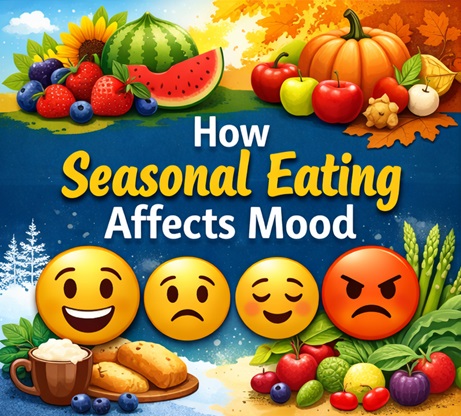
What Are Seasonal Eating Patterns?
Seasonal eating refers to consuming foods that naturally grow and are harvested during specific times of the year.
Examples of Seasonal Foods
- Spring: leafy greens, berries, herbs
- Summer: fruits, salads, hydration-rich vegetables
- Autumn: root vegetables, squash, whole grains
- Winter: warm foods, legumes, nuts, stored produce
These foods align with the body’s nutritional and metabolic needs during each season.
Why Seasonal Eating Matters for Mood
Nutrient Availability and Brain Function
Seasonal foods provide nutrients that directly influence mood-regulating neurotransmitters such as:
- Serotonin (happiness and calm)
- Dopamine (motivation and pleasure)
- GABA (relaxation and stress reduction)
Eating seasonally helps maintain neurochemical balance, supporting emotional health.
Gut-Brain Connection
The gut produces a large portion of mood-related neurotransmitters. Seasonal foods support gut diversity, which plays a key role in mental clarity and emotional stability.
Spring Eating Patterns and Mood
Emotional Reset and Renewal
Spring foods are typically light and detoxifying, helping the body transition from winter heaviness.
Mood benefits include:
- Improved energy
- Reduced mental fog
- Enhanced motivation
Best Spring Foods for Mood
- Leafy greens
- Asparagus
- Fresh herbs
- Citrus fruits
These foods support liver health and nutrient absorption, improving emotional balance.
Summer Eating Patterns and Mood
Light Foods and Elevated Mood
Summer diets are rich in fruits and hydration-focused foods, which support:
- Higher serotonin levels
- Improved mood stability
- Better stress tolerance
Hydration and Mental Health
Dehydration can cause irritability and fatigue. Summer foods with high water content help maintain mental alertness and emotional calm.
Mood-supportive summer foods include:
- Berries
- Watermelon
- Cucumbers
- Tomatoes
Autumn Eating Patterns and Emotional Stability
Grounding and Comfort
Autumn foods are naturally grounding and warming, helping prepare the body for colder months.
Emotional Benefits
- Improved emotional regulation
- Reduced anxiety
- Enhanced sense of calm
Key Autumn Mood Foods
- Sweet potatoes
- Pumpkin
- Whole grains
- Apples
These foods support steady blood sugar, which is essential for mood control.
Winter Eating Patterns and Mood Challenges
Reduced Sunlight and Mood Changes
Winter often brings lower vitamin D levels, which are linked to mood disorders such as seasonal affective disorder (SAD).
Cravings and Emotional Eating
Cold weather increases cravings for comfort foods, which may lead to:
- Blood sugar fluctuations
- Low energy
- Mood swings
Best Winter Foods for Emotional Health
- Legumes
- Nuts and seeds
- Fermented foods
- Warm, cooked meals
These foods support gut health and emotional resilience.
How Modern Diets Disrupt Seasonal Mood Balance
Year-Round Processed Foods
Ultra-processed foods ignore seasonal nutritional needs and may contribute to:
- Inflammation
- Poor gut health
- Mood instability
Artificial Food Availability
Eating the same foods year-round reduces nutrient diversity, impacting emotional health.
Blood Sugar, Seasons, and Mood
Stable blood sugar is critical for mood regulation.
Seasonal whole foods help:
- Prevent energy crashes
- Reduce irritability
- Support mental clarity
Refined carbohydrates and sugary foods worsen emotional fluctuations.
Seasonal Eating and Stress Hormones
Season-appropriate foods help regulate cortisol levels.
- Summer foods cool the body and reduce stress
- Winter foods support warmth and hormone balance
Balanced cortisol levels are essential for calmness and emotional control.
Seasonal Eating and Mental Energy
Matching food choices with seasonal needs supports:
- Cognitive performance
- Focus and productivity
- Emotional resilience
Ignoring seasonal signals may increase fatigue and burnout.
Practical Tips to Eat Seasonally for Better Mood
- Choose locally grown produce
- Eat more whole foods
- Adjust meal temperature with seasons
- Reduce processed foods
- Maintain consistent meal timing
Small seasonal adjustments can significantly improve emotional well-being.
Seasonal Eating and Lifestyle Alignment
Combining seasonal eating with:
- Adequate sleep
- Natural light exposure
- Regular movement
creates a powerful foundation for stable mood and mental health.
Internal Linking Suggestions (for DailyHealthPortal.com)
- Link to: “Gut Health and Mental Well-Being”
- Link to: “How Diet Affects Brain Function”
- Link to: “Natural Ways to Improve Mood”
These links strengthen SEO relevance and user engagement.
Conclusion: Eating With the Seasons for Emotional Balance
Seasonal eating patterns have a profound effect on mood, energy, and emotional stability. By aligning food choices with natural cycles, individuals can support brain health, gut balance, and mental resilience.
In a modern world disconnected from natural rhythms, seasonal eating offers a simple yet powerful way to restore emotional harmony and well-being.
Frequently Asked Questions (FAQs)
1. How does seasonal eating affect mood?
Seasonal eating provides nutrients aligned with the body’s needs, supporting neurotransmitters and gut health that regulate mood and emotional balance.
2. Can seasonal eating help with anxiety and stress?
Yes, seasonal whole foods help stabilize blood sugar and cortisol levels, reducing anxiety and improving stress resilience.
3. Why do people feel low during winter?
Reduced sunlight, lower vitamin D levels, and poor dietary choices can negatively affect mood during winter months.
4. Does gut health change with seasons?
Yes, gut microbiome diversity shifts with dietary changes, and seasonal foods support better gut-brain communication.
5. Is seasonal eating better than modern diets?
Seasonal eating encourages nutrient diversity and natural balance, while modern processed diets often contribute to inflammation and mood instability.
6. Can seasonal eating improve energy levels?
Yes, eating foods suited to seasonal needs supports stable energy and reduces fatigue.
7. How can I start eating seasonally?
Focus on local produce, whole foods, and adjusting meal types based on weather and seasonal availability.